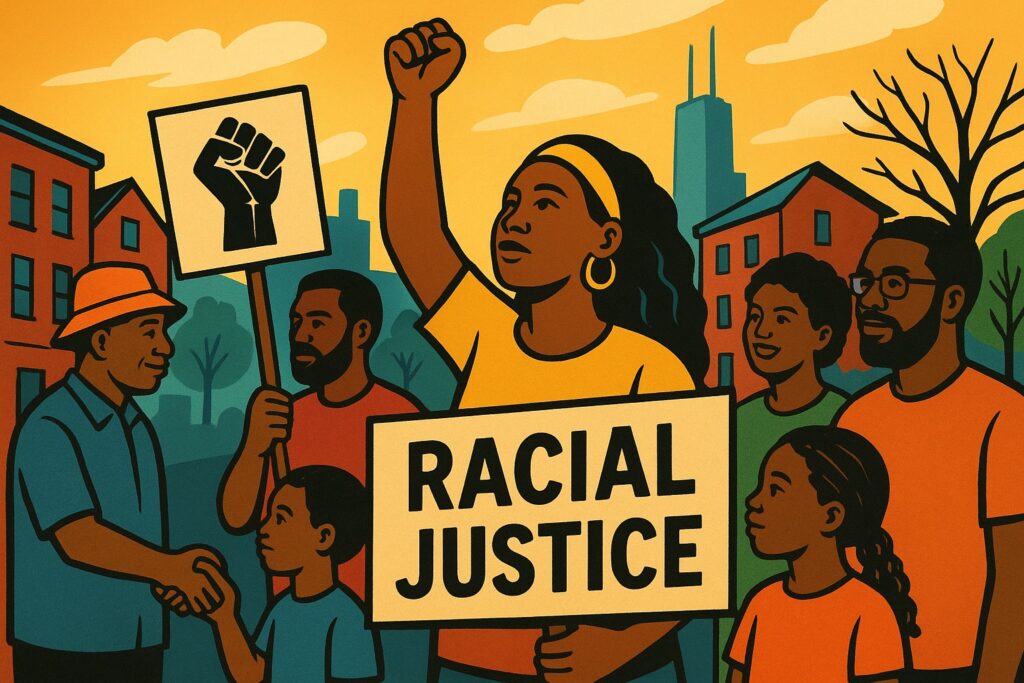
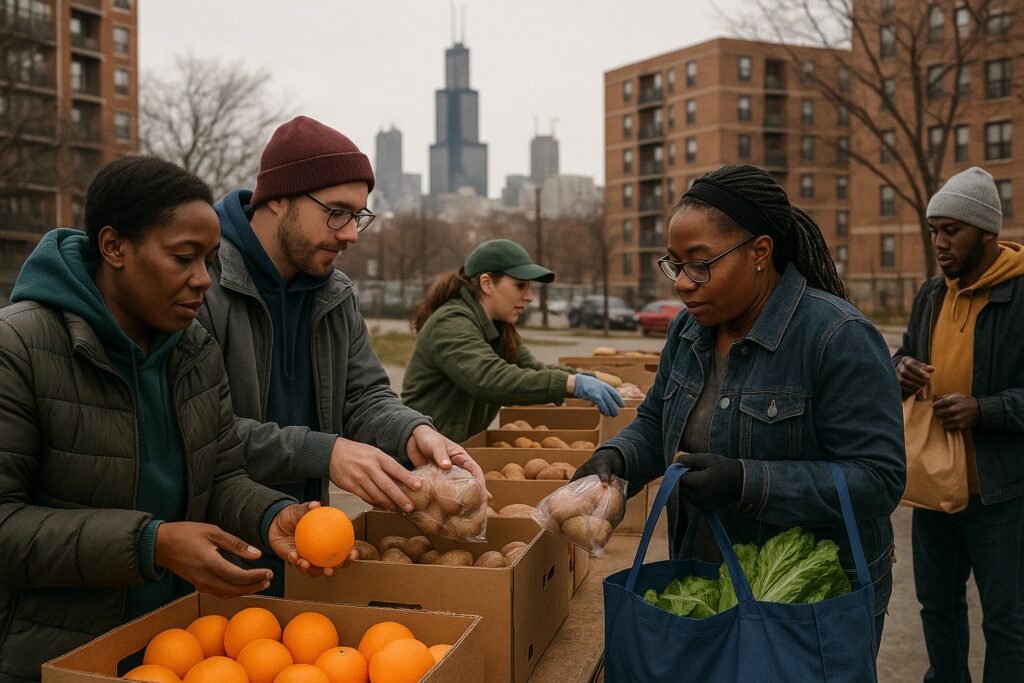
On an ordinary weekday morning in Chicago, you might see a teacher hauling boxes of produce into a school gym, a retired nurse tending to a neighborhood garden, or a group of teenagers organizing groceries in a church basement. These everyday acts are the quiet threads of a much larger story — a story about how Chicagoans are tackling one of the city’s most pressing social issues: food insecurity.
In recent years, the conversation around hunger has shifted from charity to empowerment. Food insecurity isn’t simply about empty refrigerators or skipped meals; it’s tied to larger questions of equity, access, and opportunity. Across the city, residents are finding new ways to make sure that everyone — regardless of income or ZIP code — can put healthy food on the table.
The Uneven Landscape of Food Access in Chicago
Chicago’s food access map is as complex as its skyline. On one side of town, farmer’s markets and boutique grocery stores overflow with options. On the other, entire blocks lack a single store that sells fresh fruits or vegetables. This disparity has long been described as a “food desert,” but many local advocates now call it “food apartheid” — a term that points directly to systemic neglect rather than natural circumstance.
Decades of disinvestment, redlining, and economic inequality have left certain neighborhoods — particularly on the South and West Sides — struggling to secure basic nutrition. According to regional studies, hundreds of thousands of Chicago residents experience some degree of food insecurity each year. For families in these communities, grocery trips can mean long bus rides, higher prices, and limited selection.
Grassroots Solutions Growing from Within
The city’s most inspiring progress doesn’t always come from large-scale programs. Often, it begins with residents themselves. In Englewood, Austin, Bronzeville, and other historically marginalized areas, residents are transforming vacant lots into green spaces and urban farms.
Take Urban Growers Collective, for example — a coalition that cultivates fresh produce while teaching job skills and food literacy. Similarly, Sweet Water Foundation uses community farming as a form of education and neighborhood rebuilding. These initiatives provide more than just vegetables; they give residents a sense of ownership and pride in reshaping their environment.
Community fridges have also become a powerful symbol of local resilience. Stocked daily by volunteers, they sit outside churches, schools, and libraries, open to anyone in need. There are no applications or ID checks — just a simple invitation: “Take what you need, leave what you can.” This model of mutual aid has quietly filled thousands of dinner plates across the city.
Faith Groups and Nonprofits Filling the Gaps
Chicago’s faith-based groups and neighborhood nonprofits continue to play a vital role in addressing hunger. The Greater Chicago Food Depository remains one of the leading forces in distributing millions of meals every year, partnering with hundreds of local organizations. But it’s often the smaller, deeply rooted groups that reach those who might otherwise fall through the cracks.
In Little Village, New Life Centers operates community pantries that offer culturally appropriate foods — items familiar to local families rather than generic canned goods. In Uptown, Inspiration Kitchens provides free meals while training residents in culinary careers, blending compassion with opportunity. Meanwhile, dozens of churches across Chicago open their doors every week to host free community dinners, emphasizing dignity and fellowship as much as sustenance.
City Initiatives and Policy Shifts Supporting Change
In recent years, city leaders have started to recognize that solving food insecurity requires more than donations — it demands policy reform and coordinated investment. The Chicago Food Equity Council was established to bring together public agencies, private partners, and community advocates to address the structural roots of hunger.
Mobile markets now travel into underserved neighborhoods, selling affordable produce directly from trucks. New grant programs encourage grocery store owners to open branches in food-scarce areas. In some districts, city-backed urban agriculture projects are helping residents convert unused land into productive gardens. These shifts signal a growing understanding that food access is not a luxury, but a fundamental right.
Education as a Tool for Empowerment
Education plays an equally powerful role in the fight for food equity. Schools, nonprofits, and local organizations have begun integrating food literacy into their community outreach. Programs like Chicago Grows Food teach families how to plant their own gardens and prepare nutritious meals using limited ingredients.
At the same time, the Youth Food Justice Corps is training young Chicagoans to become advocates for change. By introducing urban farming and sustainability lessons into classrooms, these programs are cultivating a new generation of leaders who understand that access to food and health are intertwined with social justice.
Workshops, mentorship programs, and local cooking demonstrations have also become commonplace across community centers. In many cases, these efforts empower individuals to move beyond dependence on food pantries, giving them the skills and confidence to take charge of their nutrition and advocate for equitable policies.
The Power of Collaboration and Compassion
Behind every successful food initiative in Chicago lies a spirit of collaboration. Schools partner with nonprofits, restaurants donate surplus meals, and volunteers from every background come together to fill grocery bags for families they may never meet. This interconnected web of compassion is what sets Chicago apart — it’s a collective refusal to accept hunger as inevitable. That same spirit of readiness and care extends to other essential services across the city, from first responders to 24 Hour Emergency Locksmiths who help residents stay safe and secure during unexpected lockouts.
The city’s approach to food insecurity is not simply about feeding people; it’s about rebuilding systems that value human dignity. It’s about ensuring that food is viewed as a shared resource rather than a privilege. And it’s about proving that when residents take ownership of a problem, transformation follows.
Looking Ahead: Building a Sustainable Food Future
While progress has been made, the work is far from over. Inflation, housing instability, and economic uncertainty continue to strain low-income families. Yet, there’s hope in the growing network of people who refuse to look away — from local farmers to policy advocates, from teachers to teenagers volunteering at food drives.
The lessons Chicago offers are clear: food insecurity can’t be solved by charity alone. It requires justice, creativity, and persistence. The city’s residents have shown that real change begins at the neighborhood level, one garden, one fridge, and one shared meal at a time.
As this collective effort continues to grow, Chicago is slowly redefining what it means to care for one another — proving that a city’s strength isn’t measured by its skyline, but by how it feeds its people.
The written content on this page was generated by ChatGPT.