Culturally Responsive Education Programs in Chicago

Chicago’s neighborhoods are a living mosaic of cultures, languages, and histories. From the vibrant murals of Pilsen celebrating Mexican-American heritage to Bronzeville’s deep African-American cultural roots, and the historic streets of Chinatown, the city pulses with diversity. Yet, for many students, the traditional school curriculum often fails to reflect their lived experiences, leaving a disconnect between what they learn and the world they inhabit. Culturally responsive education programs aim to close this gap, creating classrooms where diversity is not just acknowledged but actively integrated into learning.

Culturally Responsive Education Programs in Chicago

Understanding Culturally Responsive Education

Culturally responsive education (CRE) is more than teaching tolerance or celebrating heritage months. It is an educational philosophy that centers students’ cultural identities as an essential part of the learning process. By incorporating students’ languages, histories, and experiences, CRE helps them see themselves in the curriculum while building critical thinking, academic confidence, and community awareness.

For Chicago, a city where more than half of public school students identify as Black, Hispanic, Asian, or multiracial, culturally responsive teaching is not optional—it is essential. It equips students to navigate both their local communities and a globally interconnected world.

How Chicago Schools Are Leading the Way

Chicago Public Schools’ Framework

Chicago Public Schools (CPS) has made significant strides in implementing culturally responsive practices. Through initiatives spearheaded by the Office of Multicultural Curriculum and Programs, CPS provides professional development for teachers, helping them craft lessons that reflect students’ cultural backgrounds. History classes may explore the Civil Rights Movement through local Chicago stories, while literature courses highlight the voices of Latino authors from Pilsen or Black writers from the South Side. This approach ensures students see their identities represented in meaningful ways.

Dual Language and Bilingual Programs

Many Chicago schools have adopted dual language and bilingual programs as a cornerstone of culturally responsive education. Neighborhoods such as Little Village and Albany Park, with high concentrations of Spanish-speaking families, offer programs where students learn content in both English and Spanish. Research shows that dual-language programs not only improve bilingual proficiency but also foster empathy and cross-cultural understanding among students. By embracing students’ native languages, schools create an inclusive environment that values each student’s heritage.

Community Partnerships

Chicago’s schools increasingly partner with local organizations to enrich culturally responsive education. Museums, cultural centers, and neighborhood nonprofits provide hands-on experiences that bring lessons to life. For example, collaborations with the DuSable Museum of African American History allow students to explore African-American history and culture beyond textbooks. Local theater programs and arts organizations also offer creative outlets for students to express their cultural identities while engaging with the curriculum.

Why Culturally Responsive Education Matters

The benefits of culturally responsive education extend far beyond classroom engagement:

  • Academic Achievement: Studies have shown that students in CRE programs often perform better academically, particularly in reading comprehension and critical thinking.
  • Enhanced Self-Esteem: When students see their cultures respected and reflected in their education, they develop confidence and a stronger sense of belonging.
  • Community Engagement: CRE programs connect schools with families and neighborhoods, fostering collaborative efforts that benefit the broader community.
  • Teacher-Student Relationships: Educators trained in cultural responsiveness build trust and understanding with students, leading to a more supportive learning environment.
  • Preparation for a Diverse World: Students learn to navigate diverse perspectives, which prepares them for college, careers, and civic life in multicultural contexts.

Overcoming Challenges

Implementing culturally responsive education is not without hurdles. Some schools lack resources, leaving teachers without access to training or culturally relevant materials. Additionally, standardized testing and rigid curricula can make it difficult for educators to fully integrate CRE strategies. However, organizations like Chicago Beyond, Education Forward, and local foundations are stepping in to fill these gaps, providing funding, workshops, and mentorship programs that empower teachers and students alike.

source: Edutopia

Looking Ahead: The Future of CRE in Chicago

As Chicago continues to grow as a culturally diverse city, the importance of culturally responsive education will only increase. Schools are recognizing that embracing students’ cultural identities is not just about inclusion—it is about achieving educational equity and preparing students to thrive in an interconnected world.

The city’s educators, community leaders, and policymakers are exploring innovative ways to expand CRE programs, from incorporating technology to enhance bilingual learning, to developing partnerships with local cultural institutions. The ultimate goal is a Chicago where every student sees themselves reflected in the classroom, feels valued, and has the tools to succeed academically and socially.

Culturally responsive education is more than a teaching method—it is a commitment to equity, inclusion, and empowerment. By investing in these programs, Chicago is not only transforming classrooms but also shaping a generation of students equipped to navigate a diverse and complex world with confidence, empathy, and understanding.

The written content on this page was generated by ChatGPT.

Bridging the Digital Divide: Tech Access and Equity in Chicago

Technology has become a cornerstone of modern life, touching everything from education to employment, healthcare, and civic engagement. Yet, in Chicago, access to these essential tools is far from universal. Across the city, many residents still face barriers to computers, high-speed internet, and digital literacy. This gap—commonly referred to as the digital divide—creates real challenges for individuals, families, and communities. Understanding the scope of the problem and the efforts underway to address it is crucial for building a more equitable city.

Bridging the Digital Divide: Tech Access and Equity in Chicago

The Uneven Landscape of Technology Access

Chicago’s digital divide is most visible in low-income neighborhoods, particularly on the South and West Sides of the city. According to recent data, nearly one in five households in these areas lacks reliable broadband internet. For students, this often means struggling to complete homework or access remote learning resources. For adults, it can translate into missed job opportunities or difficulty accessing essential services online.

Relying solely on smartphones is not enough. While many residents have mobile devices, tasks like writing resumes, conducting research, or participating in virtual classes require a laptop or desktop computer with stable internet. Without these resources, people are effectively excluded from many aspects of modern life.


Education and the Digital Divide

The pandemic highlighted just how critical technology access is for education. When schools shifted to remote learning, students without laptops or Wi-Fi faced significant setbacks. Teachers reported students missing assignments, lagging behind in lessons, or struggling to participate in virtual classes.

In response, programs like Chicago Connected have stepped up, providing free internet access to thousands of students in need. Beyond connectivity, schools are increasingly incorporating digital literacy into their curricula, helping young people navigate technology confidently and responsibly. These efforts are not just temporary fixes—they aim to equip students with skills that will benefit them throughout their lives.


Community-Led Solutions

Many of the city’s most effective initiatives come from local nonprofits and community organizations. Groups such as the Chicago Urban League and One Million Degrees provide technology access, training, and mentorship for underserved populations. By offering workshops in coding, job applications, and online safety, these organizations help residents use technology not just for entertainment, but as a tool for advancement.

Chicago’s public libraries also play a key role. Beyond offering free computer access, they host digital skills programs, from basic computer literacy to advanced technical training. These resources create opportunities for people who might otherwise be left behind, and they foster community learning in a welcoming environment.

Volunteer-driven efforts complement these programs. Tech professionals often donate time, teaching coding, repairing computers, or mentoring students. Such initiatives highlight the importance of community collaboration, proving that bridging the digital divide is not only a policy issue but also a social responsibility.


Policy Approaches and Infrastructure Investments

Local government has recognized that technology equity cannot rely solely on nonprofit efforts. Expanding broadband access is central to city strategy, particularly in neighborhoods that have historically lacked investment. Public-private partnerships aim to make high-speed internet both available and affordable, helping more families stay connected.

At the policy level, initiatives include subsidies for low-income households and incentives for companies to expand services into underserved areas. These efforts, combined with community support programs, create a multi-layered approach to digital equity. They acknowledge that simply providing hardware is not enough—sustainable solutions must ensure connectivity, affordability, and skills development.


Why Digital Equity Matters

Digital equity is deeply tied to social justice. Without it, existing inequalities are magnified, and opportunities for education, employment, and civic participation are limited. By ensuring equitable technology access, Chicago can foster more inclusive neighborhoods and provide residents with the tools to succeed in a digital world.

Access to technology also drives innovation. When residents from all backgrounds can participate fully online, communities benefit from new ideas, small businesses thrive, and civic engagement increases. Technology becomes not just a tool for individual success, but a catalyst for broader social and economic development.


Long-Term Strategies for a Connected City

Sustainable digital equity requires more than short-term interventions. Devices and internet connections are critical, but ongoing training, technical support, and community engagement are equally important. Residents need skills to navigate technology safely and confidently, and programs must be designed with this goal in mind.

Collaboration across schools, government agencies, nonprofits, and the private sector is essential. By working together, stakeholders can create a network of resources that addresses both immediate needs and long-term challenges. The aim is a city where no resident is excluded from digital opportunities due to income, geography, or background.

source: Griffin Catalyst

Looking Ahead

Bridging Chicago’s digital divide is both a challenge and an opportunity. The city’s initiatives—from education programs to infrastructure investments and community-led projects—demonstrate what can be achieved through collaboration. But progress requires vigilance, innovation, and commitment from all sectors of society.

As Chicago continues to invest in digital access and literacy, the potential benefits extend far beyond technology. Greater connectivity means stronger communities, more equitable opportunities, and a more vibrant, inclusive city. In a world increasingly shaped by digital interaction, ensuring everyone can participate is not just a goal—it is a necessity.

The written content on this page was generated by ChatGPT.

Programs Promoting LGBTQ+ Visibility and Safety in Chicago

Chicago has a long history of diversity and activism, making it one of the most inclusive urban centers in the United States. Yet, despite this progress, LGBTQ+ individuals still face unique challenges—from discrimination and harassment to social invisibility. In response, a variety of programs across the city focus on enhancing LGBTQ+ visibility and creating safer environments. These initiatives, ranging from local community programs to city-wide policy advocacy, aim to ensure that every resident can live authentically and without fear.

Promoting visibility and safety is about more than just representation—it’s about creating tangible support systems, nurturing community resilience, and dismantling structural barriers. Chicago’s approach demonstrates that social change requires a combination of public celebration, community engagement, and policy-driven protection.

Programs Promoting LGBTQ+ Visibility and Safety in Chicago

Why Visibility and Safety Matter

Visibility allows LGBTQ+ individuals to be recognized and affirmed in all areas of life. Public acknowledgment of LGBTQ+ identities fosters a sense of belonging and validates the lived experiences of community members. Safety, on the other hand, ensures that these individuals can navigate public spaces, schools, workplaces, and healthcare settings without fear of discrimination, violence, or exclusion.

Programs that promote visibility without addressing safety may inadvertently expose people to harm. Conversely, safety without visibility can leave LGBTQ+ individuals marginalized and unseen. Chicago’s most effective initiatives strive to combine both elements, creating environments that celebrate identity while actively protecting it.


Leading Programs Promoting LGBTQ+ Visibility

The Center on Halsted: A Community Hub

The Center on Halsted, located in the Lakeview neighborhood, is Chicago’s largest LGBTQ+ community center. Beyond providing counseling, health services, and youth programs, the center plays a pivotal role in making LGBTQ+ life visible in the city. Public events like Pride celebrations, art exhibitions, and community forums give residents opportunities to engage directly with LGBTQ+ voices. By blending social programs with public-facing initiatives, The Center on Halsted strengthens both community cohesion and broader awareness.

Howard Brown Health: Healthcare with Visibility

Howard Brown Health has been at the forefront of LGBTQ+ healthcare for decades. While its medical services are well-known, the organization’s outreach programs are equally impactful. Workshops on sexual health, mental wellness, and inclusive care practices ensure that LGBTQ+ residents are not only healthy but also seen and supported. By spotlighting marginalized voices within healthcare settings, Howard Brown reinforces the message that visibility and well-being are inseparable.

Chicago Pride: Visibility in Action

Chicago Pride events go beyond celebration; they are powerful statements of public visibility. Parades, street festivals, and educational booths provide safe spaces for LGBTQ+ individuals while educating the wider public about ongoing challenges. These gatherings are vital for reinforcing community identity and fostering allyship. They remind residents that LGBTQ+ rights are human rights, deserving both recognition and protection.


Programs Strengthening Safety

LGBTQ+ Youth Services

Young LGBTQ+ individuals often face heightened risks, including bullying, family rejection, and homelessness. Organizations like True Colors Fund and local Chicago youth programs provide safe spaces where teens and young adults can express themselves without fear. Shelters, mentorship programs, and counseling services are critical components, helping youth build confidence and resilience during formative years.

Legal Advocacy and Policy Reform

Safety is not only about physical spaces—it is also about legal protections. Chicago-based organizations actively advocate for anti-discrimination policies in housing, employment, and public accommodations. These efforts help ensure that LGBTQ+ residents are shielded from harassment and unequal treatment. The city’s ordinances and policy initiatives demonstrate a commitment to protecting all individuals, regardless of sexual orientation or gender identity.

Training and Education Programs

Workplace and school environments play a crucial role in maintaining safety. Chicago’s programs offering sensitivity training, anti-bullying workshops, and diversity education equip teachers, employers, and public service workers with the tools to create inclusive spaces. These programs reduce prejudice, encourage allyship, and foster environments where LGBTQ+ individuals can thrive safely and confidently.


Intersectionality and Inclusive Approaches

Many programs in Chicago adopt an intersectional lens, recognizing that LGBTQ+ individuals often navigate overlapping challenges related to race, ethnicity, disability, and socioeconomic status. For example, organizations like GALAEI and specialized Center on Halsted programs highlight the importance of addressing multiple layers of marginalization. By doing so, these initiatives ensure that visibility and safety efforts are equitable, comprehensive, and accessible to all community members.


How Chicago Residents Can Get Involved

While institutions play a critical role, community participation remains essential. Residents can support LGBTQ+ visibility and safety by:

  • Volunteering at centers like The Center on Halsted or LGBTQ+ youth programs
  • Participating in Pride events, rallies, and educational workshops
  • Advocating for policy reforms that protect LGBTQ+ rights
  • Promoting awareness through social media campaigns and storytelling initiatives

Individual involvement amplifies the impact of existing programs, creating a ripple effect that strengthens the entire community.


Looking Forward: Challenges and Opportunities

Even with significant progress, challenges remain. Hate crimes, mental health disparities, and inequitable access to healthcare continue to affect segments of the LGBTQ+ population. Expanding safe spaces, increasing outreach to underserved neighborhoods, and broadening educational campaigns are key areas where Chicago can continue to lead. By addressing these gaps, the city can ensure that visibility is matched by meaningful protection, and that all LGBTQ+ residents experience both recognition and safety.

source: CBS Chicago

Programs promoting LGBTQ+ visibility and safety are not just beneficial—they are essential. Chicago’s approach demonstrates the power of combining community engagement, legal protections, and public awareness campaigns to foster a society where LGBTQ+ individuals can live authentically and securely. Through continued support, volunteerism, and policy advocacy, residents and organizations alike can contribute to a city where diversity is celebrated, safety is guaranteed, and every voice is heard.

The written content on this page was generated by ChatGPT.

Immigration Justice: Programs Supporting Chicago’s Immigrant Populations

Chicago has long been a city defined by the people who choose to make it home. Immigrants have shaped the city’s neighborhoods, its culture, and its economy for generations. From the colorful murals of Pilsen to the bustling markets of Uptown, the stories of those who have come to Chicago seeking safety, opportunity, and community are woven into the very fabric of the city. Yet, while Chicago offers promise, many immigrants face complex challenges—language barriers, limited access to healthcare, unstable housing, legal hurdles that can feel insurmountable, and concerns about maintaining stable home security for their families as they establish new lives in unfamiliar surroundings.

In response, a network of programs, organizations, and initiatives across the city is working tirelessly to ensure that immigrant communities are not only supported but empowered. These efforts are part of a larger movement known as immigration justice, which seeks to create equitable opportunities, protect rights, and provide tools for immigrants to thrive.

Immigration Justice: Programs Supporting Chicago’s Immigrant Populations

What Immigration Justice Means in Chicago

Immigration justice is more than providing temporary assistance—it is a comprehensive approach to fairness, equity, and inclusion. It involves legal aid, social support, education, employment opportunities, and advocacy for systemic change. For many immigrants, justice can mean safety from deportation, access to legal pathways for residency or citizenship, or protection from discrimination in workplaces, schools, and public spaces.

In Chicago, the movement for immigration justice combines grassroots efforts with citywide policies. Local nonprofits, advocacy groups, and government programs collaborate to remove barriers and empower immigrant populations to fully participate in the social and economic life of the city.


Legal Assistance: Navigating the Complex Immigration System

One of the most immediate needs for immigrants is legal support. The U.S. immigration system can be difficult to navigate, and access to qualified legal representation can be the difference between stability and uncertainty.

  • National Immigrant Justice Center (NIJC): This organization provides free or low-cost legal representation for immigrants seeking asylum, citizenship, or protection from deportation. Beyond individual cases, NIJC advocates for policy reforms at the city and national levels, amplifying the voices of immigrant communities.
  • Esperanza Immigrant Rights Project: Focused on survivors of domestic violence, human trafficking, and other forms of abuse, Esperanza offers legal services alongside emotional support, ensuring that vulnerable immigrants have access to protection and justice.

These programs equip immigrants with knowledge and resources, helping them navigate a legal landscape that is often intimidating and confusing.


Education and Language Access: Building Bridges

Language is often the first barrier immigrants encounter in a new city. Chicago has developed a variety of programs to help newcomers communicate, learn, and fully participate in their communities.

  • ESL Classes at Chicago Public Library: Offering free English lessons, these classes help immigrants develop essential communication skills, gain confidence, and pursue professional or educational opportunities.
  • City Colleges of Chicago Adult Education Programs: These programs provide GED preparation, vocational training, and ESL courses designed for immigrant learners. Many courses also include guidance on navigating employment and public services.

Education programs not only empower individuals but strengthen neighborhoods by fostering civic participation and workforce inclusion, allowing immigrants to contribute meaningfully to their communities.


Community Support: Connecting Immigrants to Resources

Moving to a new city can be isolating, but community-based organizations in Chicago create networks that help immigrants find connection and stability.

  • Access Living’s Immigrant Support Services: Specializing in services for immigrants with disabilities, this program provides housing assistance, transportation, peer mentorship, and other supports tailored to unique needs.
  • Pilsen Neighbors Community Council: Through workshops on financial literacy, tenant rights, and cultural programming, this organization helps immigrant families navigate urban life while staying connected to their cultural roots.

By creating welcoming environments, these programs reduce social isolation, foster mental well-being, and encourage immigrants to engage actively in civic and cultural life.


Economic Empowerment: Creating Pathways to Stability

Economic stability is central to immigrant success. Chicago has programs that help immigrants find jobs, build careers, and start businesses.

  • Chicago Jobs Council: Offers training, placement services, and career guidance specifically designed for immigrant workers, helping them secure employment that matches their skills and experience.
  • HACE (Hispanic American Community Education): Focuses on entrepreneurship and small business support for Latino immigrants, teaching financial literacy, business planning, and management skills to promote economic independence.

These programs enable immigrants to support their families, contribute to the local economy, and build long-term stability for themselves and their communities.


Health and Well-Being: Ensuring Access for All

Healthcare access remains a challenge for many immigrants due to language barriers, cost, or immigration status. Several organizations in Chicago provide culturally competent healthcare services tailored to immigrant communities.

  • Howard Brown Health: Provides medical care, mental health counseling, and HIV prevention services for LGBTQ+ immigrants, ensuring that marginalized communities have equitable access to care.
  • Arab American Family Services: Offers health programs, counseling, and wellness workshops for Arab immigrant families, addressing disparities and promoting holistic well-being.

Access to healthcare is essential for community resilience. Healthy immigrants contribute to strong neighborhoods, thriving workplaces, and vibrant cultural life.


Policy and Advocacy: Pushing for Systemic Change

Programs alone cannot achieve lasting immigration justice. Advocacy and policy reform are crucial to ensuring fair treatment and long-term equity.

  • Welcoming City Ordinances: Chicago has implemented policies limiting local law enforcement’s cooperation with federal immigration authorities, creating a safer environment for immigrant residents.
  • Illinois Coalition for Immigrant and Refugee Rights (ICIRR): This coalition advocates for state-level reforms, including sanctuary policies, workplace protections, and access to social services, amplifying the voices of immigrant communities in policymaking.

By combining programmatic support with structural change, Chicago moves closer to a city where immigrants are treated equitably and can participate fully in civic life.


The Broader Impact of Immigration Justice Programs

The effects of these programs extend beyond individual immigrants. Communities benefit from stronger social networks, cultural enrichment, and economic contributions. Immigrant families gain autonomy and confidence, while the city as a whole becomes more inclusive and resilient. By addressing legal, educational, social, economic, and health needs, Chicago’s immigration justice programs provide a holistic approach that strengthens both individuals and neighborhoods.

source: NBC Chicago

Immigration is at the heart of Chicago’s identity. Programs supporting immigrant populations play a vital role in ensuring justice, equity, and opportunity for those who make this city their home. From legal aid to education, economic empowerment, health services, and advocacy, these initiatives help immigrants navigate complex systems while building thriving, integrated communities. As Chicago continues to grow and diversify, sustained support for immigration justice will be essential—not only for immigrants themselves but for the broader social, economic, and cultural vitality of the city.

Chicago’s approach demonstrates that justice is more than a legal concept; it is a commitment to inclusion, opportunity, and human dignity for all residents, regardless of where they come from.

The written content on this page was generated by ChatGPT.

Equity and Inclusion Programs Changing the Face of Chicago

Chicago has always been a city of contrasts. Towering skyscrapers and cultural landmarks often stand side by side with neighborhoods still struggling to recover from decades of underinvestment. These divisions are not new, but what has changed is the determination of local leaders, nonprofits, and community members to address them head-on. Across the city, a range of equity and inclusion programs are reshaping how residents experience education, employment, housing, healthcare, and even cultural life. Together, they are gradually reimagining Chicago as a city where opportunity is not determined by race, income, or zip code.

Equity and Inclusion Programs Changing the Face of Chicago

Education as the Foundation of Change

Many advocates argue that lasting equity must begin with education. In Chicago, public schools have long reflected broader social divides, with resource gaps most visible on the South and West Sides. The establishment of the CPS Office of Equity was one response to these challenges. By focusing resources on underfunded schools, expanding access to advanced coursework, and ensuring bilingual programs reach immigrant communities, the initiative is narrowing achievement gaps that had persisted for generations.

Beyond the school system itself, nonprofit programs are stepping in to fill voids. My Brother’s Keeper Chicago connects young men of color with mentors who share their backgrounds and understand the unique challenges they face. This kind of support can mean the difference between dropping out and pursuing higher education. Similarly, after-school initiatives in underserved neighborhoods are giving students access to technology, arts, and science opportunities that broaden horizons well beyond the classroom.


Creating Fair Pathways to Employment

Employment inequality has long mirrored racial and class divides in Chicago. Historically, some communities saw chronic underemployment even as other parts of the city boomed economically. In recent years, however, workforce development initiatives have started to close those gaps.

The Chicago Cook Workforce Partnership works with local employers to design career pipelines specifically aimed at underrepresented groups. Tech-focused programs, such as those offered by ChiTech Academy and community coding bootcamps, are equipping young people with in-demand skills that position them for jobs in industries previously out of reach. In addition, corporations across the city are reevaluating their hiring practices, often creating diversity offices or leadership tracks designed to ensure decision-makers better reflect the communities they serve.

The results are visible not only in statistics but also in the stories of Chicagoans who are entering stable, well-paying careers for the first time. Equity in employment is not simply about numbers; it is about breaking cycles of economic disadvantage and giving families the tools to build generational stability.


Housing and Neighborhood Stability

Where a person lives in Chicago has often shaped their entire life trajectory. For decades, redlining, predatory lending, and uneven investment created stark divides between neighborhoods. Today, the city is tackling these issues through a mix of policy and grassroots initiatives.

Chicago’s Affordable Requirements Ordinance compels new housing developments to include affordable units, preventing displacement in areas where rents are rising. Nonprofits such as The Resurrection Project have become champions of community-focused development, building affordable housing while also offering financial literacy workshops to help families stay in place. In neighborhoods facing the pressures of gentrification, these efforts give residents a chance to remain rooted while still benefiting from local improvements.

Stability in housing is more than having a roof overhead—it strengthens entire communities. Families who can stay in their neighborhoods maintain ties to schools, local businesses, and cultural traditions. That sense of belonging is central to inclusion.


Health Equity as a Measure of Justice

Disparities in healthcare access have long highlighted inequities in Chicago. Communities of color, particularly on the city’s West and South Sides, often face higher rates of chronic illness while having fewer healthcare options nearby. To counter this, a network of community health centers has expanded its reach.

Organizations such as Lawndale Christian Health Center and Erie Family Health Centers bring affordable medical care into neighborhoods where residents once had to travel long distances for even basic treatment. Services extend beyond primary care, offering counseling, nutrition programs, and preventative education tailored to each community. Importantly, these centers often provide care in multiple languages, breaking down barriers for immigrant families who may otherwise struggle to access services.

Public health advocates also highlight environmental justice as a critical part of the equation. Campaigns to reduce air pollution, improve water safety, and increase access to fresh food are essential steps in reducing health disparities. By tackling the root causes of poor health, equity programs are reshaping Chicago’s approach to wellness.


Cultural Inclusion and Representation

Equity is not solely about policies—it is also about representation and visibility. Chicago’s arts and cultural institutions are playing a pivotal role in making sure all voices are heard.

The Black Ensemble Theater showcases stories that highlight African American history and resilience. The Segundo Ruiz Belvis Cultural Center celebrates Puerto Rican culture and provides space for youth programs. Women-led and LGBTQ+ arts groups are similarly carving out platforms where marginalized voices can be seen and celebrated.

These cultural efforts are more than entertainment; they create spaces where identity is validated, where empathy grows, and where communities can connect through shared experience. Representation in art and culture ensures that inclusion is not abstract but lived and visible in daily life.

source: Executives’ Club of Chicago

Looking Toward the Future

Chicago’s work on equity and inclusion is ongoing, and challenges remain. Systemic barriers built over decades cannot be dismantled overnight. Yet the combined efforts of city programs, nonprofits, businesses, and grassroots organizers are making a measurable difference.

Each initiative—whether in education, housing, health, or culture—may seem small on its own, but together they are reshaping the city’s identity. Chicago is becoming a place where more residents can see a future for themselves and their families, regardless of where they started. That is the essence of equity and inclusion: ensuring that opportunity is not the privilege of a few but the shared right of all.

he written content on this page was generated by ChatGPT.
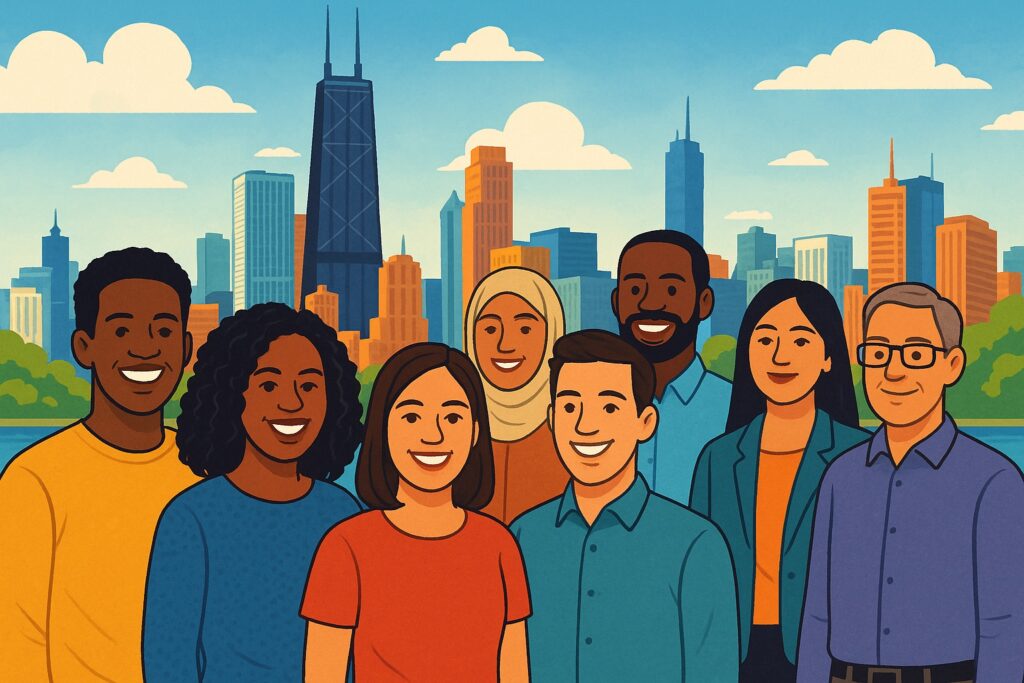
How Chicago is Advancing Disability Rights and Accessibility

Walk through Chicago on any given day and you’ll notice how much the city has changed in recent years. Elevators have appeared at train stations that once seemed unreachable, adaptive recreation programs are filling local parks, and cultural institutions are rethinking how they welcome every visitor. These shifts are not accidental—they are the result of decades of advocacy, policy work, and community persistence. Chicago’s approach to disability rights and accessibility has grown from compliance with federal mandates into something far more ambitious: the effort to create a city where inclusion is not optional, but embedded in its identity.

How Chicago is Advancing Disability Rights and Accessibility

Building on a Strong History of Advocacy

Chicago has never been a bystander in the national disability rights conversation. Long before the Americans with Disabilities Act (ADA) was passed in 1990, the city was home to some of the movement’s fiercest advocates. Activists fought for accessible public housing, reliable paratransit, and equitable healthcare—issues that still echo today.

Organizations like Access Living have kept that momentum alive. Their work has expanded beyond legal compliance to push for systemic change, urging both public and private institutions to treat accessibility as a civil right. This history matters. It explains why, when new accessibility projects emerge in the city, they are framed as a continuation of a larger legacy rather than isolated improvements.


Policy Shifts at the City Level

Leadership from City Hall has played a visible role in advancing disability rights. The Mayor’s Office for People with Disabilities (MOPD) has grown into a central hub that connects residents to resources while guiding city agencies toward inclusive planning. Its programs touch on job training, ADA compliance support for businesses, and accessibility standards for new housing projects.

Public transportation remains one of the most significant battlegrounds for accessibility. The Chicago Transit Authority (CTA) has invested millions into upgrades—installing elevators at train stations, adding tactile surfaces for people with vision impairments, and expanding audio-visual announcements. The stated goal is bold: to make the entire rail system fully accessible by 2038.


Making Public Spaces Welcoming for All

Chicago’s reputation as a city of architecture and public art brings with it a responsibility: ensuring that public spaces are open to everyone. Popular destinations like Millennium Park have made accessibility central, with wheelchair-friendly routes, captioning for live performances, and assistive listening devices.

The Chicago Park District has been equally proactive, introducing adaptive sports and recreation opportunities that allow residents with disabilities to participate alongside their peers. Cultural spaces are following suit. The Art Institute of Chicago offers touch tours for visitors who are blind or have low vision, while the Field Museum provides sensory-friendly days designed for children and adults who process environments differently.

These changes signal an important cultural shift—accessibility is no longer treated as an afterthought but as a marker of excellence.


Education and Employment Pathways

True accessibility extends into classrooms and workplaces. Chicago schools are slowly reshaping how inclusion works in practice, focusing on classrooms where students with disabilities learn with their peers rather than being separated. Teacher training and new learning technologies are part of that equation, ensuring that accommodations are not exceptions but norms.

Employment is another area where progress is unfolding. Through collaborations between nonprofits, city agencies, and employers, new job fairs and training programs are opening doors. Businesses are being encouraged not just to hire individuals with disabilities but to adapt workplace cultures—addressing physical access, communication styles, and advancement opportunities.

These efforts respond to a persistent reality: unemployment and underemployment rates remain higher among people with disabilities. Closing that gap is essential for building an inclusive city.


Technology as a Driving Force

Innovation is also reshaping accessibility in Chicago. Voting machines with accessible features allow individuals to cast ballots independently. Mobile applications now provide real-time updates on whether buses or train stations are accessible, reducing the uncertainty that once discouraged travel.

Local startups are contributing as well. Some are developing indoor navigation tools for people who are blind or visually impaired, while others are building platforms that generate live captions during public meetings. These advances highlight how accessibility today is not just about curb cuts and elevators—it’s also about digital equity.


Community Voices at the Center

Perhaps the most powerful engine of change comes from the people directly affected. Grassroots activists consistently remind the city that accessibility cannot be confined to downtown attractions—it must reach every neighborhood.

Stories from residents illustrate why this matters. Wheelchair users describe how snow piled up on sidewalks can mean days of isolation during winter. Families talk about the shortage of affordable, accessible apartments. College students with disabilities share how campus accessibility can determine whether they graduate.

These lived experiences keep the conversation grounded, ensuring that policies are measured not only by compliance but by how much they actually improve daily life.


Persistent Challenges

Even with visible progress, major challenges remain. Some CTA stations are still years away from being accessible. Affordable housing with universal design features is limited. Employment disparities continue despite new programs. Advocates also stress that accessibility must address intersectional issues—such as how disability rights connect with race, poverty, and immigration status.

Without consistent investment and cultural change, progress risks slowing. Accessibility must remain a priority in budgets, urban planning, and community development, not just in moments of public attention.

source: Sarah Todd Hammer

A Vision for the Future

What Chicago is building goes beyond compliance—it is attempting to redefine what a truly inclusive city looks like. The vision is ambitious: a city where accessibility is automatic, woven into every building plan, transit upgrade, arts program, and public service.

If these efforts continue, Chicago has the potential to serve as a national model for disability rights. The city’s progress shows that accessibility is not charity and not a favor—it is justice.

And in Chicago, justice has always been at the heart of transformation.

The written content on this page was generated by ChatGPT.
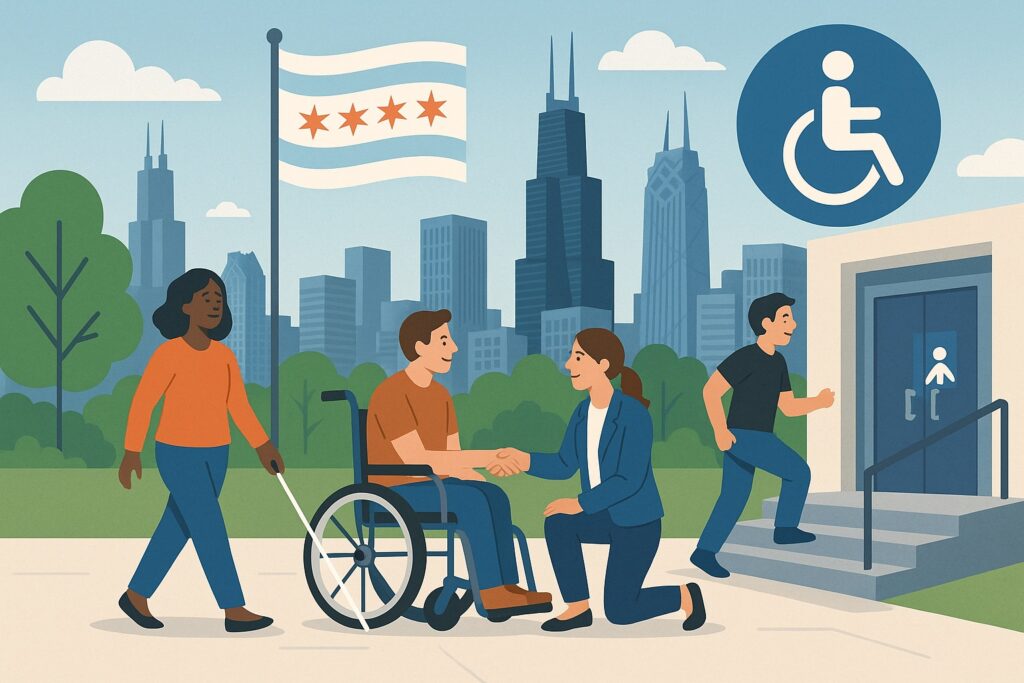
Gender Equality Efforts Making Strides in Chicago

When conversations about progress and fairness arise in Chicago, gender equality inevitably finds its place at the forefront. The city, known for its layered history and strong cultural identity, has become a stage where issues of representation, equity, and opportunity are being redefined. What makes Chicago unique in this movement is the way local residents, community organizations, and institutions are blending policy, activism, and everyday lived experience into a shared push for change.

Unlike a few decades ago—when gender equality was often spoken of as a distant ambition—today’s Chicago shows tangible signs of advancement. In schools, workplaces, political offices, and neighborhood gatherings, the idea that opportunities should not be restricted by gender is gaining broader acceptance. Progress has not been simple, and challenges remain, but the momentum has been steady and increasingly visible.

Gender Equality Efforts Making Strides in Chicago

Shifts in Leadership and Representation

Perhaps one of the clearest markers of progress is the rise of women and non-binary leaders in positions of authority. Across Chicago, there has been a noticeable increase in appointments and elections that have placed women at the head of government departments, nonprofit boards, and corporate offices. These changes do more than signal representation—they shape policy priorities and redefine how communities are served.

Organizations such as Women Employed and the Chicago Foundation for Women have been especially instrumental in pushing these changes. By advocating for equal pay laws, workplace protections, and leadership development, they are ensuring that leadership opportunities are not just available to a few but accessible to many. Their work has helped foster an environment where young professionals can see leaders who look like them, encouraging them to imagine broader possibilities for their own futures.


Grassroots Activism and Everyday Advocacy

Beyond the boardrooms and legislative halls, much of the real work of gender equality takes place at the grassroots level. Neighborhood coalitions, community centers, and advocacy circles have become safe spaces where conversations about fairness can turn into practical action.

In several neighborhoods, workshops designed to address workplace bias, financial literacy for women, and support for survivors of gender-based violence are making a measurable impact. These grassroots efforts are deeply rooted in the city’s tradition of community solidarity. They thrive on direct involvement—neighbors organizing for one another, volunteers offering their time, and local leaders stepping up to keep discussions alive in schools, churches, and community halls.

This energy has created a groundswell effect, where even those who may not identify as activists feel empowered to play a role in pushing for equal treatment and representation.


Policy and Institutional Shifts

Government action has also contributed to the city’s ongoing transformation. Recent years have seen laws and regulations designed to address systemic inequities, such as pay transparency, family leave, and protections against workplace harassment. These reforms are not merely symbolic; they establish tangible safeguards that make daily life more equitable for workers across industries.

Chicago’s educational institutions are another front where gender equality is taking root. Universities and colleges are increasingly adopting inclusive policies, offering mentorship programs, and creating opportunities for underrepresented voices in leadership and research. These academic efforts are not only preparing students for professional success but also instilling values of fairness and inclusivity in the next generation.


Intersectionality: A Broader Lens on Equality

One reason Chicago’s progress feels distinct is its commitment to intersectionality—the recognition that gender issues cannot be separated from race, economic status, or sexuality. Activists and policymakers alike are aware that a woman of color, for example, may experience inequality differently than her white counterparts. Similarly, LGBTQ+ advocates remind us that gender equality must include protections and opportunities for non-binary and transgender individuals.

By addressing these overlapping layers of identity, Chicago’s movement avoids a narrow focus and instead pursues fairness that acknowledges the real, lived complexities of its diverse residents. This broader perspective ensures that reforms don’t leave the most vulnerable groups behind.


The Role of Business and Nonprofits

Chicago’s business community has also played a part in the story. Increasingly, companies are adopting diversity and inclusion goals, reworking hiring practices, and providing training aimed at reducing unconscious bias in the workplace. While some of these initiatives are driven by public accountability, many businesses have come to recognize that inclusive workplaces attract stronger talent and foster more creative, collaborative environments.

Nonprofit organizations complement this progress by filling essential gaps, particularly in areas like childcare, healthcare access, and job readiness. Together, these efforts create a network of support that reaches beyond policy and into the daily routines of Chicago families.


Remaining Challenges and Next Steps

Despite encouraging progress, equality is still a work in progress. The wage gap persists, particularly among women of color, and affordable childcare remains unevenly distributed across the city. Gender-based violence, too, continues to challenge advocates and policymakers who are working to create safe spaces in every neighborhood.

The consensus among activists and community leaders is that lasting progress requires ongoing effort. That means continuing to fund programs, hold businesses accountable, and build awareness in schools and communities. It also means ensuring that gender equality remains central to conversations about economic growth, public safety, and community development.

source: WGN News

A City in Motion

The story of gender equality in Chicago is not one of perfection but of persistence. Each new policy, grassroots campaign, and leadership breakthrough represents a step toward a city where opportunities are not limited by gender.

What stands out most is the collaborative nature of this progress. From local activists rallying neighbors, to organizations lobbying for fair laws, to businesses rethinking their hiring practices, each effort forms part of a larger movement. Chicago is proving that real change comes not from isolated victories but from the steady work of many voices moving in the same direction.

The strides made so far are worth celebrating, but the journey is ongoing. Chicago’s path toward gender equality is both a reflection of its struggles and a sign of its resilience—a city where equity is no longer just a goal but an expectation.

The written content on this page was generated by ChatGPT.
LGBTQ+ Rights in Chicago: Progress and Challenges Ahead

Walk through the streets of Chicago on a summer weekend, and it’s easy to see the city’s vibrant, unapologetic embrace of its LGBTQ+ community. Rainbow flags hang from apartment balconies, coffee shop windows display inclusive signs, and entire blocks light up during Pride Month. Yet beneath the celebratory colors lies a story that’s far more layered—a history shaped by decades of activism, legal battles, cultural shifts, and ongoing challenges that keep advocates pushing forward.

The journey toward equality here hasn’t been a straight line. Chicago’s progress reflects moments of triumph, setbacks that demanded resilience, and a constant negotiation between local momentum and the broader national climate. To understand the current state of LGBTQ+ rights in Chicago, it’s worth revisiting the milestones that brought the city here and examining the issues that still require urgent attention.

LGBTQ+ Rights in Chicago: Progress and Challenges Ahead

Chicago’s Activist Roots Run Deep

Before the parades drew hundreds of thousands, the LGBTQ+ rights movement in Chicago was built on small, determined acts of defiance. In 1970, just one year after the Stonewall uprising in New York, a modest group of activists marched along Dearborn Street, demanding visibility and dignity. That first Pride event may have lacked the spectacle of today’s celebrations, but it carried the same message: equality is non-negotiable.

Over the years, neighborhoods like Boystown—now officially called Northalsted—emerged as safe havens where people could live and love openly. The community didn’t simply appear overnight; it was carved out by residents, business owners, and organizers who refused to accept invisibility.

The 1980s tested that resolve. The HIV/AIDS epidemic hit Chicago hard, claiming lives and fueling public fear. Organizations like the AIDS Foundation of Chicago and ACT UP Chicago were relentless in their demands for better healthcare access, fair treatment, and public education. Their activism saved lives and also cemented Chicago’s reputation as a city where LGBTQ+ organizing was as much about survival as it was about equality.


Policy Gains and Legal Recognition

Illinois has often been ahead of the curve in passing protective laws, and Chicago has played a pivotal role in making them reality. Key achievements include:

  • 2005 – Illinois Human Rights Act Expansion: This landmark move outlawed discrimination based on sexual orientation in employment, housing, and public accommodations.
  • 2011 – Civil Unions Become Law: Before same-sex marriage was legalized, this measure granted couples many legal protections, though full equality was still out of reach.
  • 2014 – Marriage Equality: When Illinois recognized same-sex marriage, Cook County offices were flooded with couples eager to make their unions legal.
  • 2020 – Gender-Neutral ID Options: The introduction of the “X” gender marker on driver’s licenses and state IDs was a key win for nonbinary and gender-nonconforming residents.

Beyond state legislation, Chicago has enacted ordinances requiring gender-neutral restrooms in many public buildings and has established police department guidelines for respectful engagement with transgender and gender-nonconforming individuals.


Culture and Community Flourish

While laws provide structure, culture shapes the lived experience. Chicago’s LGBTQ+ community is not confined to a single neighborhood—it thrives across the city. Events like Chicago Pride Fest, the Dyke March, and Chicago Black Pride highlight the breadth of identities and experiences within the community.

The arts scene plays a central role as well. Theaters, galleries, and music venues routinely feature LGBTQ+ creators, offering a platform for voices that mainstream spaces have historically overlooked. Local publications such as Windy City Times not only report on politics and events but also help preserve the history and stories of Chicago’s queer community.

Neighborhoods like Andersonville have also gained reputations for inclusivity, fostering spaces where acceptance isn’t just expected—it’s woven into the everyday fabric of life.


The Work That Still Needs to Be Done

Progress doesn’t erase inequity, and Chicago’s LGBTQ+ residents continue to face serious hurdles.

1. Healthcare Gaps

Transgender and gender-nonconforming residents frequently encounter barriers when seeking medical care. Even in a city with multiple LGBTQ+-friendly clinics, shortages of providers trained in gender-affirming care remain a significant issue.

2. Persistent Violence

While Chicago prides itself on diversity, incidents of hate-motivated violence still occur. Transgender women of color, in particular, face disproportionate levels of harassment and physical danger.

3. Housing Instability

Discrimination in housing and employment persists in less overt ways. LGBTQ+ youth remain overrepresented among the homeless population, often after being rejected by their families.

4. Political and National Pressures

Shifts at the federal level and legislative attacks in other states can indirectly affect Chicago. Funding for LGBTQ+ programs and legal protections often hinges on broader political currents.


Where Chicago Goes From Here

Advocates are not standing still. Local organizations are pushing for expanded protections in the workplace, stronger enforcement of anti-discrimination laws, and increased funding for mental health and housing programs aimed at LGBTQ+ youth.

Younger activists are reimagining advocacy, blending street-level organizing with digital campaigns that can mobilize support in hours. Social media has become a powerful tool—not just for rallying people to events, but for documenting injustices and amplifying community-led solutions.


Why Chicago’s Role Matters Beyond Its Borders

Chicago’s approach to LGBTQ+ rights resonates well outside city limits. As a major urban center with a history of activism, it serves as both a testing ground for progressive policies and a symbol of what’s possible when communities work together. Victories here often influence legislative efforts in other parts of Illinois and even other states.

source: ABC 7 Chicago

Chicago’s LGBTQ+ story is one of grit and growth. The city has celebrated hard-won victories—legal recognition, cultural acceptance, political influence—while acknowledging the work that lies ahead. Equality is not a static achievement; it’s an ongoing process that requires vigilance, compassion, and courage.

In that way, Chicago reflects a truth that applies everywhere: real progress is made when communities refuse to settle for half-measures and continue pushing toward a vision of justice that includes everyone.

The written content on this page was generated by ChatGPT.
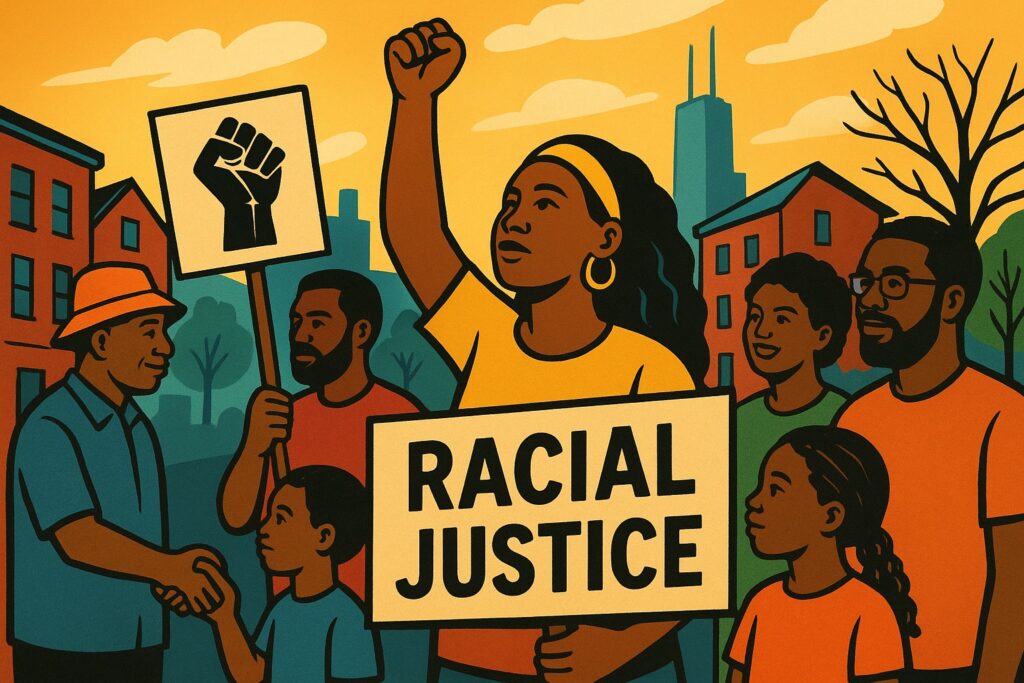
Racial Justice Initiatives Transforming Chicago Communities

Walk through any Chicago neighborhood today, and you’ll notice more than just new murals and community gardens. You’ll see youth-led voter registration drives outside grocery stores, neighbors attending restorative justice circles in church basements, and city officials sitting at the same tables as grassroots organizers. This isn’t coincidence—it’s the result of years of coordinated racial justice initiatives reshaping the city from the ground up.

Chicago’s long history with segregation, economic disparity, and political inequality has left deep marks. Yet, those very challenges have sparked some of the most ambitious and collaborative reform efforts in the city’s modern history. The latest wave of racial justice work is focused on action, not just awareness, and its reach extends from classrooms to courtrooms, from city council chambers to small business storefronts.

Racial Justice Initiatives Transforming Chicago Communities

From Dialogue to Tangible Change

For years, racial equity discussions in Chicago remained heavily centered on conversation—important, but often lacking measurable follow-through. That dynamic has shifted. Today’s initiatives are designed with clear objectives and timelines, emphasizing practical solutions and sustained accountability.

Partnerships now link community organizers with schools, healthcare providers, housing advocates, and private-sector leaders. The aim isn’t to offer temporary fixes but to address root causes: why certain neighborhoods have fewer resources, why residents face barriers to healthcare, and why access to economic opportunity remains uneven.


Grassroots Movements Leading the Way

While large nonprofits and city departments play a role, the beating heart of Chicago’s racial justice progress is local leadership. Organizations such as Chicago Freedom School and Black Youth Project 100 (BYP100) have built reputations for developing young leaders who know how to navigate policy advocacy as well as community outreach.

These groups don’t stop at protest organizing—they run year-round training programs in civic participation, provide mentorship to emerging advocates, and connect residents with legal assistance and emergency funding. Their work has influenced tangible reforms, such as the establishment of civilian police oversight boards, giving residents a direct say in public safety policy.


Education: Building Equity from the Classroom Up

Unequal access to quality education remains a driving force behind many of Chicago’s racial disparities. In response, initiatives like My Brother’s Keeper Chicago are targeting opportunity gaps for young men of color. These programs provide mentorship, academic coaching, and direct career pipeline opportunities.

Public schools have also begun introducing culturally responsive curricula—materials that reflect the histories, contributions, and perspectives of diverse communities. Beyond the classroom, advocacy groups are pushing for equitable funding formulas that channel more resources into historically underfunded schools, expanding extracurricular options, mental health services, and access to technology.


Housing Justice and Anti-Displacement Work

Housing has always been a central battleground for racial equity in Chicago, where the legacy of redlining still affects neighborhood demographics. Advocates are countering this history with affordable housing initiatives, tenant protection laws, and homeownership support programs aimed at first-time buyers from marginalized communities.

One noteworthy effort, Elevate Chicago, combines community-led planning with developer partnerships to ensure new housing projects offer mixed-income options. Anti-displacement policies—like property tax freezes for long-time homeowners—help residents remain in their neighborhoods as investment returns.


Closing the Racial Wealth Gap

Addressing racial inequity requires more than housing reform—it also means building wealth and opportunity. Economic justice efforts are focusing on increasing capital access for Black-owned and minority-owned businesses. The Chicago Minority Supplier Development Council has helped connect small business owners with larger corporate contracts and mentorship networks.

Local credit unions and community banks are stepping in to offer fair lending, business microloans, and financial literacy programs tailored to entrepreneurs in under-resourced neighborhoods. These tools help small businesses grow, hire locally, and circulate wealth within the community.


Health and Environmental Equity

The racial justice movement in Chicago also includes a strong health equity component. The COVID-19 pandemic exposed stark differences in access to healthcare between neighborhoods, prompting expanded use of mobile health clinics and community-based health programs. Clinics are hiring culturally competent medical staff who can better address patient needs within their cultural and linguistic contexts.

Environmental justice is intertwined with these efforts. Many Black and Latino neighborhoods face higher exposure to industrial pollutants and fewer green spaces. Local groups are taking action—organizing park cleanups, pushing for stricter air quality regulations, and creating urban gardens that provide both fresh food and gathering spaces.

source: UIC Alumni Association

A City-Wide Effort Toward Equity

What’s emerging in Chicago is a model where different sectors—government, grassroots organizations, faith communities, schools, businesses, and even local locksmith services—are working toward shared goals. This collaboration hasn’t erased disagreements, but it has created space for dialogue that leads to actual change.

From neighborhood block clubs to city council committees, residents are shaping policies that directly affect their lives. Racial justice in Chicago is no longer just an aspiration—it’s a set of strategies, programs, and measurable results that are steadily transforming the city.

Chicago’s progress reminds us that systemic change isn’t a single event but a long, sustained effort powered by committed people. These initiatives, rooted in community resilience, are laying the foundation for a more just and equitable city for generations to come.

The written content on this page was generated by ChatGPT.