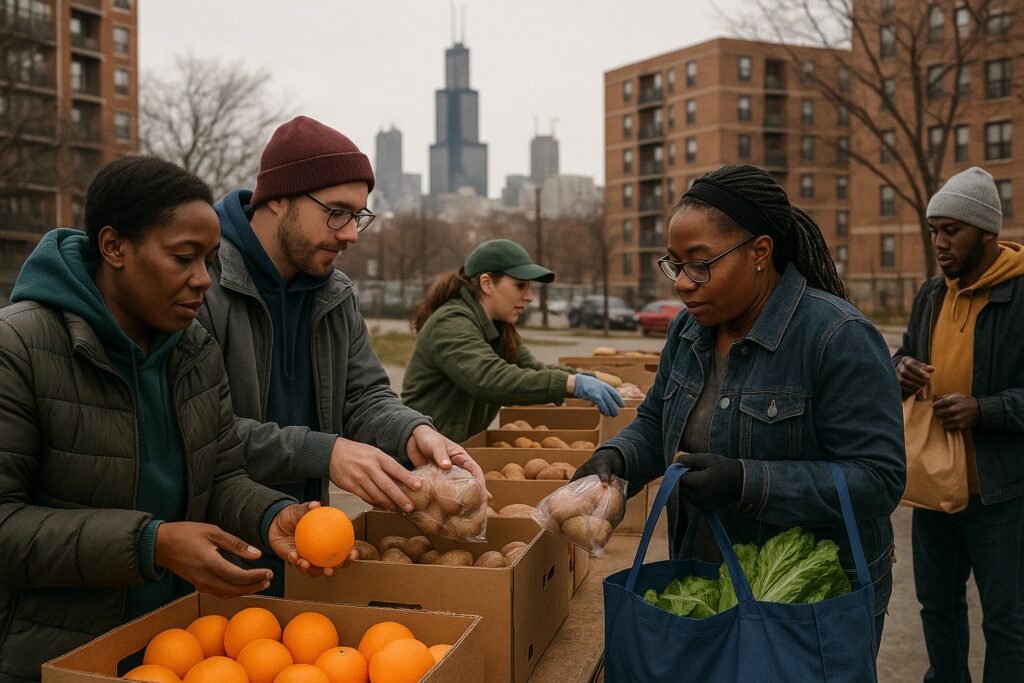
Walk through Chicago on any given day, and you’ll see a city full of resilience. It’s a place of proud neighborhoods, of families who have called the same block home for generations, and of young people who dream of safer streets and brighter futures. Yet, for decades, gun violence has cast a shadow over that vision. It’s an issue that has become part of the city’s narrative—but not one that defines it. Behind the scenes, Chicago is slowly rewriting its story through a blend of smart policy, community intervention, and long-term commitment to equity.

Understanding the Challenge
Gun violence in Chicago isn’t just about crime. It’s a symptom of something larger—decades of disinvestment, systemic inequality, limited access to opportunity, and the enduring trauma left behind by each act of violence. True public safety also includes everyday prevention measures, including home lock safety, helping families feel secure in their own homes. The city’s policymakers have come to recognize that this problem cannot be solved solely by police presence or stricter penalties. It requires a coordinated strategy that blends data, legislation, community voices, and compassion.
Studies have shown that most shootings occur in a small cluster of neighborhoods, often those hit hardest by unemployment and poverty. Chicago CRED, one of the city’s most active violence prevention groups, found that roughly three-quarters of shootings happen in just twenty of Chicago’s seventy-seven neighborhoods. That kind of concentration tells policymakers something crucial: focusing efforts where violence is most entrenched yields the biggest impact.
The Shift Toward Community Violence Intervention
One of the most significant policy shifts in recent years has been Chicago’s embrace of Community Violence Intervention (CVI). This approach moves beyond law enforcement to work directly with those at highest risk of being involved in gun violence—whether as victims or perpetrators.
Programs like Chicago CRED, FLIP (Flatlining Violence Inspires Peace), and the Peacekeepers initiative employ community members as outreach workers and “violence interrupters.” They step into volatile situations before they escalate, provide mentorship, and help connect individuals with mental health care, housing, or job training.
The policy side of this shift matters just as much as the community action. City leaders have passed funding measures, built cross-agency task forces, and formalized partnerships with local organizations to sustain these efforts. When the Peacekeepers program was deployed in 2023 and 2024, studies showed shooting incidents dropped by over 40% in targeted areas—a testament to what coordinated policy can achieve.
Public-Private Funding and Long-Term Strategy
What truly separates the current era of Chicago’s anti-violence work from earlier attempts is the scale of investment. The city and Cook County have both treated gun violence as a public health crisis, not merely a criminal one. That mindset shift has opened the door for innovative funding strategies.
The Scaling Community Violence Intervention for a Safer Chicago (SC2) initiative represents one of the most ambitious long-term plans yet. It brings together government funding, philanthropic support, and private-sector investment to build sustainable infrastructure for violence prevention. Similarly, the Cook County Justice Advisory Council distributed $85 million in American Rescue Plan funds to support mental health programs, street outreach, and youth employment opportunities.
This level of funding signals a broader policy evolution: Chicago is no longer content with pilot programs or short-term fixes. Instead, leaders are working to institutionalize violence prevention—making it a permanent part of how the city governs.
Legislative Progress on Firearm Accountability
Beyond city initiatives, state policymakers in Illinois have taken notable steps to address how firearms enter communities in the first place. One of the most talked-about reforms, Karina’s Law, ensures that individuals with revoked Firearm Owner Identification (FOID) cards who are under protective orders must surrender their weapons. It’s a direct response to gaps in previous gun laws that allowed domestic abusers continued access to firearms.
Another state measure, the Firearm Industry Responsibility Act, holds gun manufacturers and sellers accountable for unethical marketing practices and negligence that may contribute to illegal gun trafficking. These legal changes recognize that policy must target both sides of the issue: the conditions driving violence and the supply chains that feed it.
By strengthening these laws, Illinois—and by extension, Chicago—has begun to close some of the loopholes that allow guns to flow freely across state lines and into local markets. The results won’t appear overnight, but they represent a foundation for long-term prevention.
Data-Driven Policing and Collaboration
In parallel with social programs and legislative reforms, Chicago has leaned heavily on data to refine its strategies. The city’s Violence Reduction Strategy (VRS) integrates real-time analytics with community engagement. Using neighborhood-level data, the Chicago Police Department identifies “hot spots” and high-risk individuals, then collaborates with outreach teams and social service organizations to provide alternatives to violence.
Custom Notifications—personalized interventions that connect at-risk individuals to support systems rather than punishment—have emerged as an essential tool. This approach reflects a deeper understanding that violence prevention is most effective when both accountability and opportunity coexist.
Progress on the Ground
Change rarely happens all at once, but the numbers suggest that Chicago’s policy-driven approach is starting to take hold. The Peacekeepers program alone reported a 41% drop in shootings in certain areas between 2023 and 2024. Broader coalitions of community-based organizations have documented reductions of up to 34% in neighborhoods where intervention programs have expanded.
The Scaling CVI plan is now being replicated in dozens of neighborhoods across the city, laying the groundwork for consistent long-term results. While Chicago has not “solved” gun violence, these early indicators show that the city’s layered strategy—combining policy, funding, and human connection—has begun to shift the trajectory.
Persistent Challenges and Lessons Ahead
Despite this progress, the fight is far from over. Many programs still lack the scale necessary to reach everyone at risk. The constant flow of firearms from neighboring states undermines local policies, creating a supply problem beyond Chicago’s borders. Trauma remains widespread, especially among youth who have grown up surrounded by violence.
Long-term success will require steady political will, reliable funding, and more comprehensive data collection. It will also require confronting the underlying inequities that make certain neighborhoods more vulnerable than others. Without economic stability, educational opportunity, and accessible mental health care, policy alone cannot sustain peace.
Still, these challenges have taught Chicago valuable lessons that other cities can learn from:
- Gun violence must be addressed as a public health crisis, not just a policing issue.
- Policy works best when it’s community-centered and data-informed.
- Long-term investment and accountability matter more than short-term results.
- Collaboration across sectors—government, nonprofits, businesses, and residents—produces lasting impact.
A City Rewriting Its Story
Chicago’s story is no longer one of despair but of determination. The city has moved from reaction to reconstruction, using policy as both shield and tool. Lawmakers, activists, and community leaders are working from the same page, proving that meaningful change doesn’t happen in isolation—it happens when policy meets purpose.
Gun violence remains a painful chapter in Chicago’s history, but it is not the final one. Through steady investment, smarter legislation, and the unrelenting work of local communities, Chicago is showing that reform is possible—and that even the most entrenched challenges can yield to persistence, compassion, and vision.
The written content on this page was generated by ChatGPT.