Housing Policy and the Fight for Affordable Homes in Chicago

Walk through nearly any neighborhood in Chicago today and you’ll hear the same story told in different ways. Families are stretching their paychecks to cover rising rents, seniors are clinging to the homes they’ve lived in for decades, and younger residents often wonder whether they can afford to stay in the city at all. Behind these stories lies a larger truth: Chicago’s housing market is not just about supply and demand—it’s about equity, justice, and the right to a stable place to live.

Housing Policy and the Fight for Affordable Homes in Chicago

Why Housing Has Always Been a Justice Issue

Chicago’s housing challenges are not new. They are rooted in a long and complicated history of segregation, discriminatory lending, and uneven investment. Redlining maps drawn in the mid-20th century deliberately excluded communities of color from mortgages and credit, leaving entire neighborhoods without access to the tools needed for generational wealth. Later, public housing projects built with the promise of stability too often fell victim to underfunding and mismanagement, concentrating poverty rather than alleviating it.

Even as skyscrapers rose downtown and new condos appeared in gentrifying areas, many South and West Side neighborhoods saw disinvestment continue. This uneven pattern has shaped Chicago’s landscape in ways that remain visible today—luxury apartments a short train ride away from blocks where boarded-up homes are common. For many residents, this isn’t just an economic imbalance, it’s a legacy of injustice that continues to shape who gets to thrive and who struggles to stay housed.

The Policies Meant to Fix the Problem

To its credit, the city has put forward policies to address affordability. The Affordable Requirements Ordinance (ARO) forces developers of large projects to set aside a percentage of units for lower-income residents or contribute funds to housing initiatives. On paper, it looks like progress. In practice, the results are mixed.

Developers often opt to pay fees instead of building affordable units, funneling money into funds that don’t always guarantee housing in the neighborhoods where displacement is happening fastest. This leaves wealthier areas relatively untouched while concentrating lower-cost housing in already struggling communities. Other programs, such as the Low-Income Housing Tax Credit, have increased the number of units across the city, but critics argue the pace is far too slow compared to the need.

The Everyday Reality of Housing Insecurity

Policies are written in government buildings, but the consequences play out in kitchens and living rooms. A family in Uptown may find themselves paying more than half of their monthly income on rent, leaving little left for groceries or healthcare. In Pilsen, longtime residents watch property values rise around them, while landlords raise rents to levels that push working-class families out. In Englewood, where housing stock is older and often in need of repair, tenants may accept unsafe conditions simply because affordable alternatives are scarce.

These pressures ripple outward. Schools lose stability when families are forced to move frequently. Small businesses lose loyal customers when residents leave. Community ties—those networks of neighbors who look after each other—are frayed when displacement becomes a constant. In this way, the housing crisis is not just personal, it’s deeply communal. Reliable local services, from home repair specialists to garage door professionals, also play a role in maintaining the safety and value of homes across communities.

Grassroots Pressure and Calls for Change

Advocates across Chicago are pushing for stronger protections and more ambitious reforms. Some are calling for expanded tenant rights, including guaranteed legal representation for residents facing eviction. Others want stricter rules that ensure affordable units are included in new developments in every neighborhood, not just in lower-income areas.

There’s also growing interest in alternative models. Community land trusts, for example, place land under nonprofit ownership to guarantee permanent affordability, while cooperative housing gives residents shared ownership and decision-making power. Though these approaches aren’t yet widespread, they represent creative attempts to rethink what “affordable housing” means beyond short-term subsidies.

Looking Toward the Future

The direction Chicago chooses in the coming years will say a lot about what kind of city it wants to be. If unchecked gentrification continues, the risk is clear: working families, seniors, and young people will be pushed further out, transforming neighborhoods and deepening inequality. On the other hand, bold reforms—paired with genuine investment in communities—could turn housing into a tool for stability and opportunity.

Cities across the country are grappling with the same questions, but Chicago has a chance to lead. A comprehensive housing strategy that combines equitable policy, enforcement, and community-led solutions could set the tone for what a just urban housing system looks like.

source: ABC 7 Chicago

Housing has always been more than a roof over one’s head. It determines access to schools, healthcare, jobs, and the ability to build a stable future. For Chicago, the fight over affordable homes is about addressing a painful history while building a fairer city for generations to come. Just as secure garage doors help protect a home and provide peace of mind, affordable housing creates the stability families need to thrive.

As residents, activists, and policymakers debate the way forward, the message grows clearer: affordable housing is not a side issue. It’s the foundation of justice itself.

The written content on this page was generated by ChatGPT.
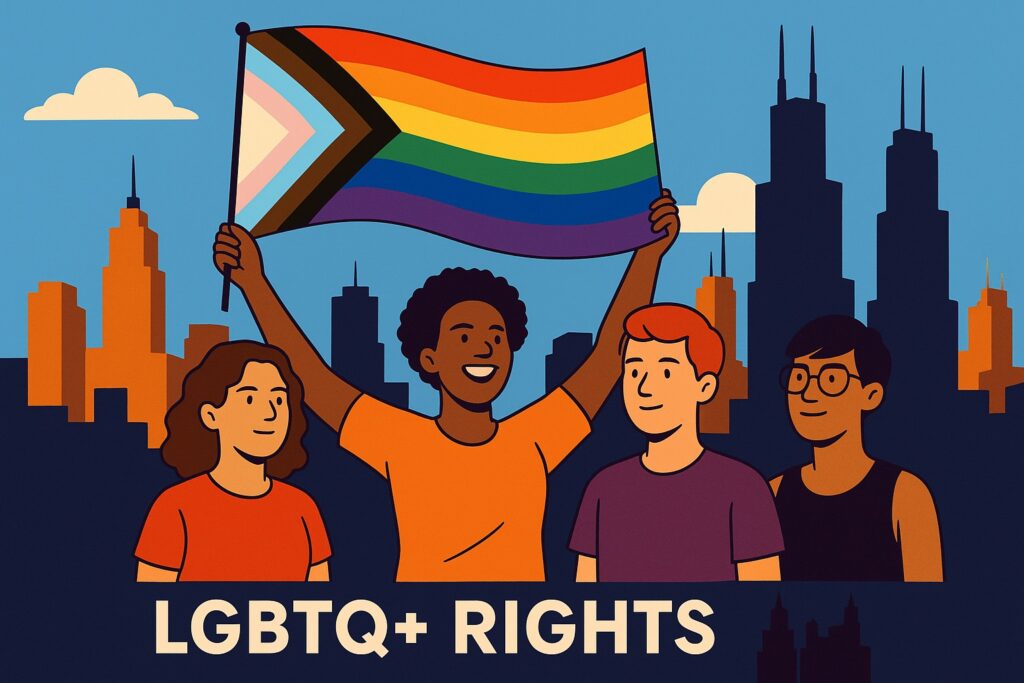
LGBTQ+ Rights in Chicago: Progress and Challenges Ahead

Walk through the streets of Chicago on a summer weekend, and it’s easy to see the city’s vibrant, unapologetic embrace of its LGBTQ+ community. Rainbow flags hang from apartment balconies, coffee shop windows display inclusive signs, and entire blocks light up during Pride Month. Yet beneath the celebratory colors lies a story that’s far more layered—a history shaped by decades of activism, legal battles, cultural shifts, and ongoing challenges that keep advocates pushing forward.

The journey toward equality here hasn’t been a straight line. Chicago’s progress reflects moments of triumph, setbacks that demanded resilience, and a constant negotiation between local momentum and the broader national climate. To understand the current state of LGBTQ+ rights in Chicago, it’s worth revisiting the milestones that brought the city here and examining the issues that still require urgent attention.

LGBTQ+ Rights in Chicago: Progress and Challenges Ahead

Chicago’s Activist Roots Run Deep

Before the parades drew hundreds of thousands, the LGBTQ+ rights movement in Chicago was built on small, determined acts of defiance. In 1970, just one year after the Stonewall uprising in New York, a modest group of activists marched along Dearborn Street, demanding visibility and dignity. That first Pride event may have lacked the spectacle of today’s celebrations, but it carried the same message: equality is non-negotiable.

Over the years, neighborhoods like Boystown—now officially called Northalsted—emerged as safe havens where people could live and love openly. The community didn’t simply appear overnight; it was carved out by residents, business owners, and organizers who refused to accept invisibility.

The 1980s tested that resolve. The HIV/AIDS epidemic hit Chicago hard, claiming lives and fueling public fear. Organizations like the AIDS Foundation of Chicago and ACT UP Chicago were relentless in their demands for better healthcare access, fair treatment, and public education. Their activism saved lives and also cemented Chicago’s reputation as a city where LGBTQ+ organizing was as much about survival as it was about equality.


Policy Gains and Legal Recognition

Illinois has often been ahead of the curve in passing protective laws, and Chicago has played a pivotal role in making them reality. Key achievements include:

  • 2005 – Illinois Human Rights Act Expansion: This landmark move outlawed discrimination based on sexual orientation in employment, housing, and public accommodations.
  • 2011 – Civil Unions Become Law: Before same-sex marriage was legalized, this measure granted couples many legal protections, though full equality was still out of reach.
  • 2014 – Marriage Equality: When Illinois recognized same-sex marriage, Cook County offices were flooded with couples eager to make their unions legal.
  • 2020 – Gender-Neutral ID Options: The introduction of the “X” gender marker on driver’s licenses and state IDs was a key win for nonbinary and gender-nonconforming residents.

Beyond state legislation, Chicago has enacted ordinances requiring gender-neutral restrooms in many public buildings and has established police department guidelines for respectful engagement with transgender and gender-nonconforming individuals.


Culture and Community Flourish

While laws provide structure, culture shapes the lived experience. Chicago’s LGBTQ+ community is not confined to a single neighborhood—it thrives across the city. Events like Chicago Pride Fest, the Dyke March, and Chicago Black Pride highlight the breadth of identities and experiences within the community.

The arts scene plays a central role as well. Theaters, galleries, and music venues routinely feature LGBTQ+ creators, offering a platform for voices that mainstream spaces have historically overlooked. Local publications such as Windy City Times not only report on politics and events but also help preserve the history and stories of Chicago’s queer community.

Neighborhoods like Andersonville have also gained reputations for inclusivity, fostering spaces where acceptance isn’t just expected—it’s woven into the everyday fabric of life.


The Work That Still Needs to Be Done

Progress doesn’t erase inequity, and Chicago’s LGBTQ+ residents continue to face serious hurdles.

1. Healthcare Gaps

Transgender and gender-nonconforming residents frequently encounter barriers when seeking medical care. Even in a city with multiple LGBTQ+-friendly clinics, shortages of providers trained in gender-affirming care remain a significant issue.

2. Persistent Violence

While Chicago prides itself on diversity, incidents of hate-motivated violence still occur. Transgender women of color, in particular, face disproportionate levels of harassment and physical danger.

3. Housing Instability

Discrimination in housing and employment persists in less overt ways. LGBTQ+ youth remain overrepresented among the homeless population, often after being rejected by their families.

4. Political and National Pressures

Shifts at the federal level and legislative attacks in other states can indirectly affect Chicago. Funding for LGBTQ+ programs and legal protections often hinges on broader political currents.


Where Chicago Goes From Here

Advocates are not standing still. Local organizations are pushing for expanded protections in the workplace, stronger enforcement of anti-discrimination laws, and increased funding for mental health and housing programs aimed at LGBTQ+ youth.

Younger activists are reimagining advocacy, blending street-level organizing with digital campaigns that can mobilize support in hours. Social media has become a powerful tool—not just for rallying people to events, but for documenting injustices and amplifying community-led solutions.


Why Chicago’s Role Matters Beyond Its Borders

Chicago’s approach to LGBTQ+ rights resonates well outside city limits. As a major urban center with a history of activism, it serves as both a testing ground for progressive policies and a symbol of what’s possible when communities work together. Victories here often influence legislative efforts in other parts of Illinois and even other states.

source: ABC 7 Chicago

Chicago’s LGBTQ+ story is one of grit and growth. The city has celebrated hard-won victories—legal recognition, cultural acceptance, political influence—while acknowledging the work that lies ahead. Equality is not a static achievement; it’s an ongoing process that requires vigilance, compassion, and courage.

In that way, Chicago reflects a truth that applies everywhere: real progress is made when communities refuse to settle for half-measures and continue pushing toward a vision of justice that includes everyone.

The written content on this page was generated by ChatGPT.
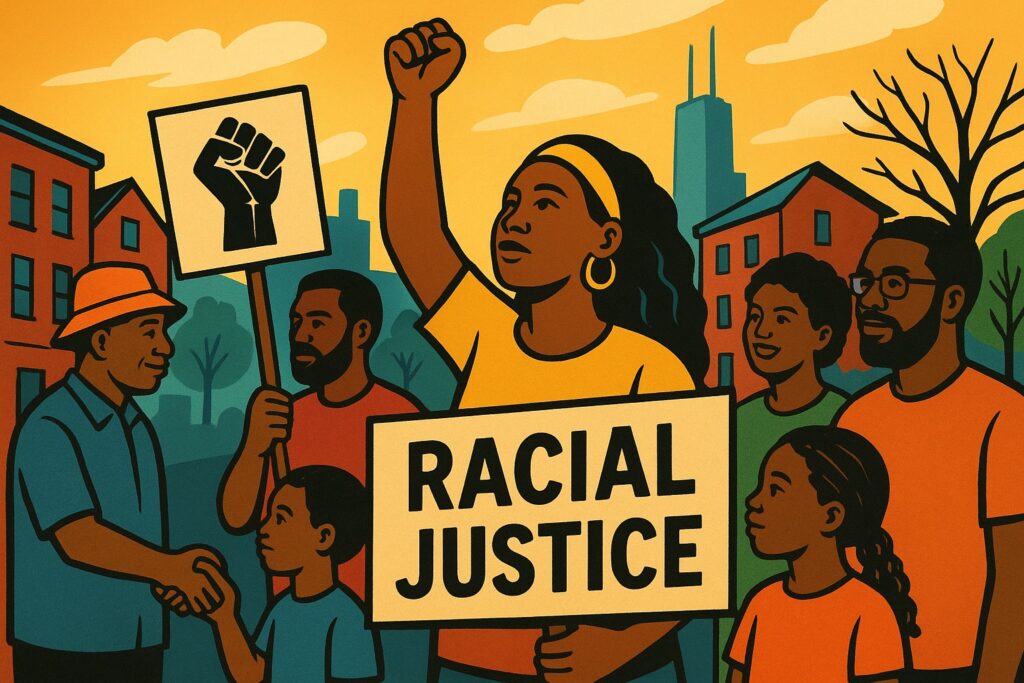
Racial Justice Initiatives Transforming Chicago Communities

Walk through any Chicago neighborhood today, and you’ll notice more than just new murals and community gardens. You’ll see youth-led voter registration drives outside grocery stores, neighbors attending restorative justice circles in church basements, and city officials sitting at the same tables as grassroots organizers. This isn’t coincidence—it’s the result of years of coordinated racial justice initiatives reshaping the city from the ground up.

Chicago’s long history with segregation, economic disparity, and political inequality has left deep marks. Yet, those very challenges have sparked some of the most ambitious and collaborative reform efforts in the city’s modern history. The latest wave of racial justice work is focused on action, not just awareness, and its reach extends from classrooms to courtrooms, from city council chambers to small business storefronts.

Racial Justice Initiatives Transforming Chicago Communities

From Dialogue to Tangible Change

For years, racial equity discussions in Chicago remained heavily centered on conversation—important, but often lacking measurable follow-through. That dynamic has shifted. Today’s initiatives are designed with clear objectives and timelines, emphasizing practical solutions and sustained accountability.

Partnerships now link community organizers with schools, healthcare providers, housing advocates, and private-sector leaders. The aim isn’t to offer temporary fixes but to address root causes: why certain neighborhoods have fewer resources, why residents face barriers to healthcare, and why access to economic opportunity remains uneven.


Grassroots Movements Leading the Way

While large nonprofits and city departments play a role, the beating heart of Chicago’s racial justice progress is local leadership. Organizations such as Chicago Freedom School and Black Youth Project 100 (BYP100) have built reputations for developing young leaders who know how to navigate policy advocacy as well as community outreach.

These groups don’t stop at protest organizing—they run year-round training programs in civic participation, provide mentorship to emerging advocates, and connect residents with legal assistance and emergency funding. Their work has influenced tangible reforms, such as the establishment of civilian police oversight boards, giving residents a direct say in public safety policy.


Education: Building Equity from the Classroom Up

Unequal access to quality education remains a driving force behind many of Chicago’s racial disparities. In response, initiatives like My Brother’s Keeper Chicago are targeting opportunity gaps for young men of color. These programs provide mentorship, academic coaching, and direct career pipeline opportunities.

Public schools have also begun introducing culturally responsive curricula—materials that reflect the histories, contributions, and perspectives of diverse communities. Beyond the classroom, advocacy groups are pushing for equitable funding formulas that channel more resources into historically underfunded schools, expanding extracurricular options, mental health services, and access to technology.


Housing Justice and Anti-Displacement Work

Housing has always been a central battleground for racial equity in Chicago, where the legacy of redlining still affects neighborhood demographics. Advocates are countering this history with affordable housing initiatives, tenant protection laws, and homeownership support programs aimed at first-time buyers from marginalized communities.

One noteworthy effort, Elevate Chicago, combines community-led planning with developer partnerships to ensure new housing projects offer mixed-income options. Anti-displacement policies—like property tax freezes for long-time homeowners—help residents remain in their neighborhoods as investment returns.


Closing the Racial Wealth Gap

Addressing racial inequity requires more than housing reform—it also means building wealth and opportunity. Economic justice efforts are focusing on increasing capital access for Black-owned and minority-owned businesses. The Chicago Minority Supplier Development Council has helped connect small business owners with larger corporate contracts and mentorship networks.

Local credit unions and community banks are stepping in to offer fair lending, business microloans, and financial literacy programs tailored to entrepreneurs in under-resourced neighborhoods. These tools help small businesses grow, hire locally, and circulate wealth within the community.


Health and Environmental Equity

The racial justice movement in Chicago also includes a strong health equity component. The COVID-19 pandemic exposed stark differences in access to healthcare between neighborhoods, prompting expanded use of mobile health clinics and community-based health programs. Clinics are hiring culturally competent medical staff who can better address patient needs within their cultural and linguistic contexts.

Environmental justice is intertwined with these efforts. Many Black and Latino neighborhoods face higher exposure to industrial pollutants and fewer green spaces. Local groups are taking action—organizing park cleanups, pushing for stricter air quality regulations, and creating urban gardens that provide both fresh food and gathering spaces.

source: UIC Alumni Association

A City-Wide Effort Toward Equity

What’s emerging in Chicago is a model where different sectors—government, grassroots organizations, faith communities, schools, businesses, and even local locksmith services—are working toward shared goals. This collaboration hasn’t erased disagreements, but it has created space for dialogue that leads to actual change.

From neighborhood block clubs to city council committees, residents are shaping policies that directly affect their lives. Racial justice in Chicago is no longer just an aspiration—it’s a set of strategies, programs, and measurable results that are steadily transforming the city.

Chicago’s progress reminds us that systemic change isn’t a single event but a long, sustained effort powered by committed people. These initiatives, rooted in community resilience, are laying the foundation for a more just and equitable city for generations to come.

The written content on this page was generated by ChatGPT.
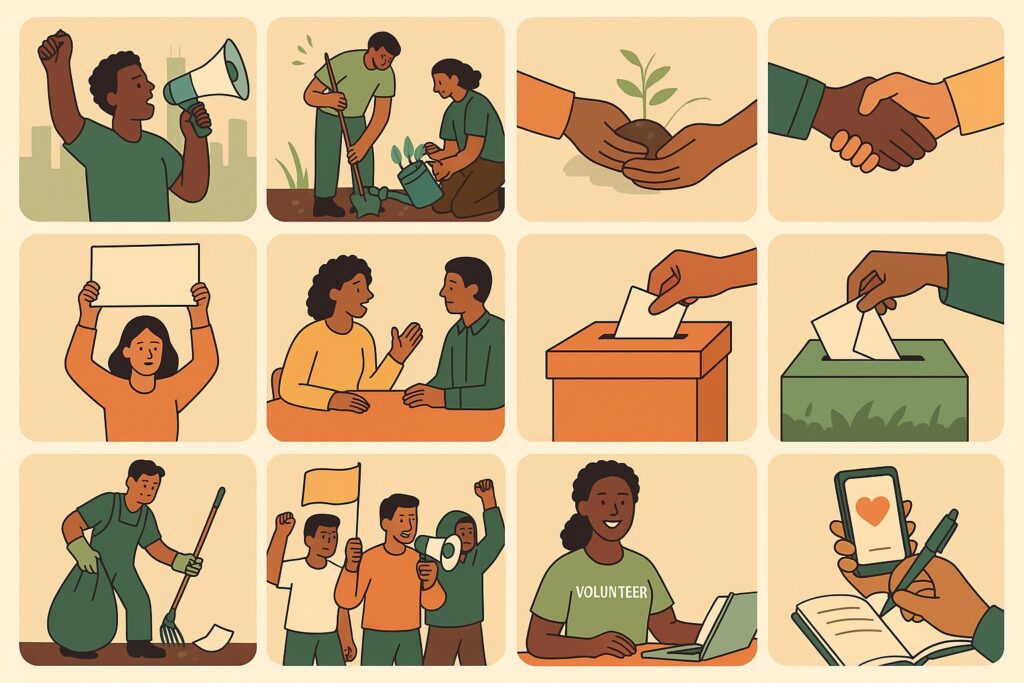
10 Practical Ways to Get Involved in Chicago’s Grassroots Movements

In Chicago, activism isn’t just something that happens in the headlines—it’s woven into the city’s history, culture, and identity. From neighborhood block clubs to citywide coalitions, grassroots organizing has shaped how communities respond to inequality, advocate for fair policies, and build lasting social change.

Many people want to get involved but feel uncertain about where to start. The truth is, joining a grassroots movement in Chicago doesn’t require a political science degree, years of activism experience, or even a large budget. What it does require is curiosity, willingness to listen, and a commitment to showing up in ways that matter.

Below are ten practical, meaningful approaches to plug into the heart of Chicago’s grassroots efforts—each one adaptable to your skills, schedule, and comfort level.

10 Practical Ways to Get Involved in Chicago’s Grassroots Movements

1. Connect with a Community-Based Organization

One of the most direct ways to get involved is by joining a local group already doing the work. Grassroots organizations often form in response to specific issues: protecting affordable housing, addressing environmental hazards, improving public safety, or defending civil rights.

Look into groups like Pilsen Alliance, which focuses on housing and community development, or Chicago Coalition for the Homeless, which advocates for policy change while offering direct support. Attend an open meeting, introduce yourself to organizers, and ask how you can contribute—whether that means staffing events, knocking on doors, or helping with research.


2. Volunteer Your Expertise

You don’t have to be on the front lines to make an impact. Many grassroots groups need behind-the-scenes help: creating flyers, updating websites, handling data entry, or managing social media. If you have a background in design, communications, law, translation, or even accounting, your skills can fill an essential gap in a group’s operations. For example, supporting your community through reliable home security solutions helps ensure neighbors have safe, secure homes while you contribute your expertise.

This type of involvement not only supports the movement but also allows you to participate consistently without overextending yourself.


3. Show Up at Neighborhood Meetings

A lot of change starts with conversations that happen in church basements, school auditoriums, and community centers. Local neighborhood association meetings and ward council sessions are where residents share concerns and discuss solutions.

Even if you’re new, simply attending shows that you care about your community’s future. Over time, you’ll become more comfortable speaking up, proposing ideas, and connecting with other residents who share your priorities.


4. Support Fundraising Efforts

Grassroots movements often operate with very limited financial resources. Fundraisers—whether a community dinner, an art show, or an online campaign—are vital for covering everything from printing materials to paying for meeting spaces.

By attending and contributing, you’re not only helping keep the lights on but also meeting people face-to-face, building trust, and forming connections that go beyond a single event.


5. Join Demonstrations and Public Actions

Chicago has a rich tradition of marches, rallies, and public vigils—forms of collective action that have historically moved issues into the public eye. Participating in a demonstration can be powerful, but it’s important to approach it thoughtfully: know the cause, understand the message, and follow any guidelines shared by organizers.

Locations like Daley Plaza and Federal Plaza are common gathering points for peaceful protests on issues ranging from climate justice to workers’ rights.


6. Advocate Through Social Media

Digital spaces are an extension of today’s organizing landscape. By following local advocacy pages, sharing verified information, and amplifying calls to action, you can help grassroots messages reach a much wider audience.

Online advocacy works best when it’s consistent, fact-based, and paired with offline action. Sharing a petition is great—showing up to deliver it is even better.


7. Contribute to Mutual Aid Networks

Mutual aid is the idea that communities can meet each other’s needs directly, without waiting for official institutions to step in. Chicago has many such networks, from food distribution collectives to winter coat drives.

Groups like Southside Mutual Aid and Chi-Nations Youth Council rely on volunteers to sort donations, deliver supplies, and connect with residents in need. These efforts are often hyper-local and highly personal, allowing you to see the immediate effects of your involvement.


8. Engage with Youth and Schools

Young people are often the driving force behind new ideas and bold action. Partnering with schools, youth centers, or leadership programs can be a rewarding way to share knowledge and encourage civic participation.

This might mean leading a workshop on public speaking, mentoring a student activist, or collaborating on a school project that addresses a local issue. Investing in young leaders helps ensure that the work you contribute to now continues into the future.


9. Educate Yourself and Share What You Learn

Effective activism isn’t just about passion—it’s also about understanding the issues at stake. That means learning the history of Chicago’s social movements, studying relevant policies, and hearing directly from people most affected by injustice.

Attend panel discussions, read works by local authors, or join study groups focused on community organizing. As you deepen your understanding, you’ll be better equipped to have informed conversations and bring others into the fold.


10. Commit to Consistency

It’s tempting to jump from cause to cause, but lasting change requires staying the course. Choose one or two movements that resonate deeply with you and commit to supporting them long-term.

Even if your contributions are small—helping once a month, attending occasional meetings, donating when you can—your steady presence helps movements maintain momentum and morale.

source: The Atlantic

Closing Thoughts

Grassroots organizing is at the heart of Chicago’s resilience. It’s what allows neighborhoods to defend themselves against displacement, demand cleaner air and water, and hold leaders accountable. The beauty of grassroots work is that it welcomes everyone—from lifelong activists to people just taking their first step into civic life.

You don’t have to be a loud voice on a stage to make an impact. Sometimes the most powerful contributions come from those who quietly, steadily show up, connect with others, and keep pushing forward. In Chicago, that’s how real change has always begun—and how it will continue.

The written content on this page was generated by ChatGPT.