When walking through the streets of Chicago, it’s impossible not to notice the vibrant murals, sculptures, and public art pieces that define the city’s neighborhoods. But beyond their visual appeal, many of these installations carry a deeper purpose: they challenge the community to think critically about social issues, spark conversations about inequality, and inspire collective action. In Chicago, a city known for its cultural richness and diversity, art has become more than decoration—it is a tool for social awareness, civic engagement, and community transformation.
The Transformative Power of Public Art
Art is uniquely capable of reaching people on an emotional level. Unlike academic reports or policy statements, public art engages individuals directly, prompting reflection and dialogue in a way that feels personal and immediate. In Chicago, artists are increasingly leveraging this power to address pressing social issues, from racial justice to environmental concerns. These installations serve as both mirrors and megaphones—reflecting community experiences while amplifying voices that often go unheard.
Public art’s accessibility is one of its greatest strengths. Unlike gallery exhibits that may be limited to certain audiences, murals, sculptures, and interactive installations exist in public spaces, making social commentary available to anyone who passes by. This democratization of art allows people from all walks of life to encounter, interpret, and react to social issues in real time.
Chicago Neighborhoods Leading the Way
Pilsen’s Murals: Celebrating Heritage and Challenging Inequality
The Pilsen neighborhood is renowned for its colorful murals that celebrate Mexican-American heritage while simultaneously highlighting social challenges like gentrification and cultural erasure. Artists such as Jesse Rodriguez and Arturo Blanco use walls as canvases to tell stories of community resilience, resistance, and pride. Each mural acts as a visual dialogue with the neighborhood, encouraging residents to reflect on the community’s past while engaging with its present challenges.
The South Side’s “Wall of Resilience”
On Chicago’s South Side, the Wall of Resilience stands as a testament to community strength. The installation features portraits, stories, and symbols that honor residents’ efforts to overcome adversity, from economic struggles to systemic inequities. This piece not only documents history but also inspires ongoing civic participation, demonstrating how art can celebrate human endurance while motivating continued advocacy.
Interactive Installations for Civic Engagement
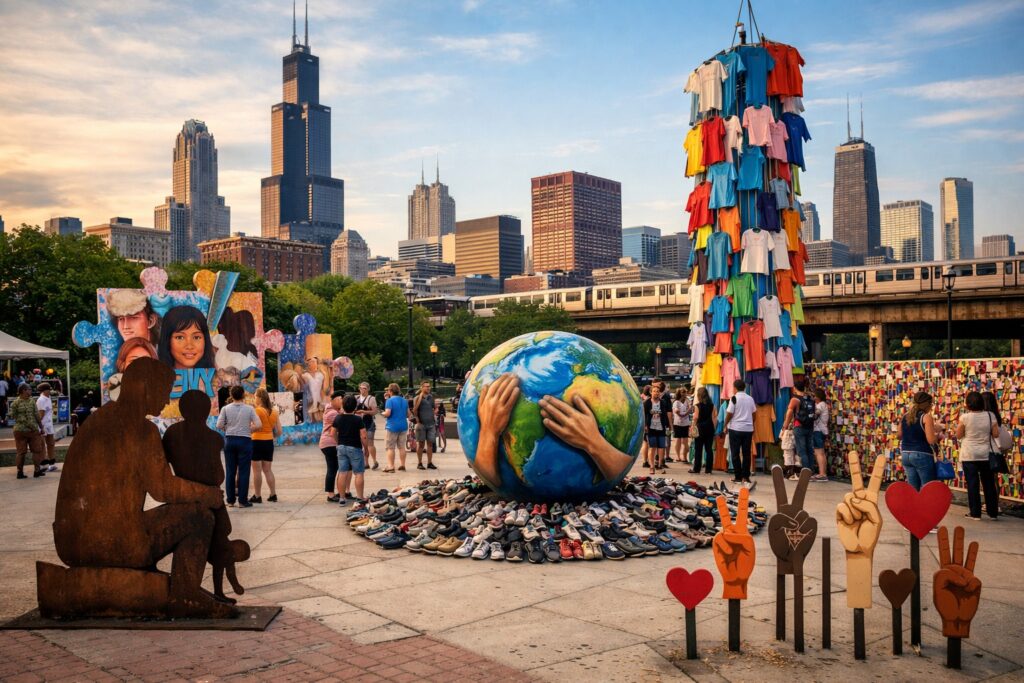
Projects like the “Raise Your Voice” installation in Grant Park take public engagement a step further. Visitors are invited to contribute their personal reflections and experiences, creating a collective tapestry of voices. By interacting with the piece, participants gain a tangible understanding of community dynamics, empathy for others’ experiences, and a sense of agency in shaping social change.
Addressing Environmental and Social Justice
Chicago’s art scene is increasingly tackling environmental issues, particularly in neighborhoods affected by industrial pollution and climate vulnerability. Sculptures and installations made from recycled or reclaimed materials highlight the city’s ecological challenges, from air quality concerns to waste management issues. These works serve as visual catalysts for awareness, prompting residents to consider sustainable practices while also pressuring policymakers to prioritize environmental justice.
Similarly, public art has become a platform for amplifying marginalized voices. Artists from underrepresented communities use installations to share their experiences with systemic inequities, whether related to race, gender, disability, or immigration. By embedding these narratives into public spaces, art transforms ordinary streets and parks into forums for dialogue, education, and empowerment.
Building Community Through Art
One of the most remarkable aspects of socially-conscious art is its ability to foster community collaboration. Many installations involve residents directly, whether through participatory mural projects, community workshops, or collaborative sculpture construction. This participatory process nurtures a sense of belonging, encourages civic pride, and strengthens social bonds.
Furthermore, these projects often serve as educational tools. Schools, local organizations, and community centers integrate public art into lessons about history, social justice, and civic responsibility. Students learn not only about artistic techniques but also about the societal issues the art addresses, creating a new generation of socially-conscious citizens.
Art as a Catalyst for Policy Change
While art often starts as a form of expression, its impact can extend into the realm of policy and social reform. Installations that highlight housing inequality, environmental hazards, or public safety issues can raise awareness that influences city policies. For example, community engagement with environmentally-focused art has prompted local initiatives for cleaner streets, better waste management, and equitable green spaces.
By offering a platform for dialogue and visibility, public art ensures that community concerns reach a broader audience, including policymakers and civic leaders. It creates a space where residents’ voices are heard, often leading to tangible changes in social programs, legislation, and city planning.
Looking Ahead: The Future of Socially-Conscious Art in Chicago
Chicago continues to support and expand socially-conscious art through public funding, nonprofit initiatives, and neighborhood programs. Grants and community arts funds encourage artists to tackle pressing social issues, ensuring that public spaces remain sites of engagement and empowerment.
As the city evolves, socially-conscious art will continue to play a critical role in bridging gaps between communities, policymakers, and the public. By merging creativity with civic engagement, Chicago demonstrates how art can be a powerful tool for fostering awareness, empathy, and tangible social change.
Chicago’s public art scene is a vivid reminder that art is not just an aesthetic pursuit—it is a force for awareness, dialogue, and action. From murals celebrating heritage to interactive installations promoting civic engagement, these projects educate, inspire, and mobilize communities around critical social issues.
For residents and visitors alike, exploring Chicago’s socially-conscious art offers more than visual enjoyment; it provides insight into the city’s ongoing struggles and triumphs in promoting equity, justice, and inclusion. By engaging with these installations, individuals become part of a broader conversation, one that transforms streets, neighborhoods, and ultimately the city itself.
The written content on this page was generated by ChatGPT.