When conversations about progress and fairness arise in Chicago, gender equality inevitably finds its place at the forefront. The city, known for its layered history and strong cultural identity, has become a stage where issues of representation, equity, and opportunity are being redefined. What makes Chicago unique in this movement is the way local residents, community organizations, and institutions are blending policy, activism, and everyday lived experience into a shared push for change.
Unlike a few decades ago—when gender equality was often spoken of as a distant ambition—today’s Chicago shows tangible signs of advancement. In schools, workplaces, political offices, and neighborhood gatherings, the idea that opportunities should not be restricted by gender is gaining broader acceptance. Progress has not been simple, and challenges remain, but the momentum has been steady and increasingly visible.
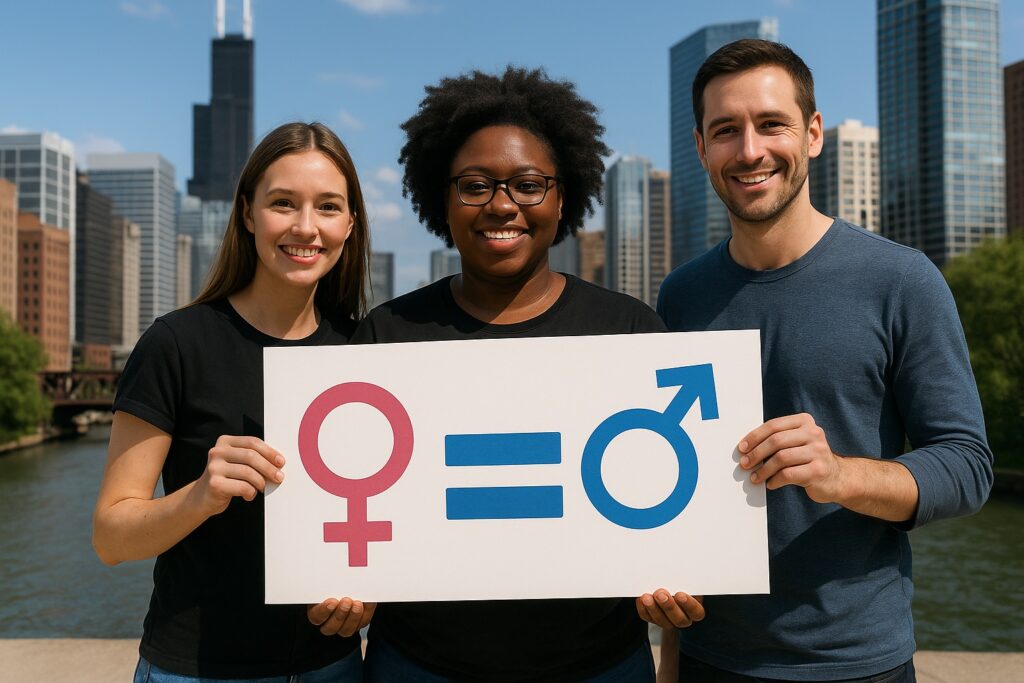
Shifts in Leadership and Representation
Perhaps one of the clearest markers of progress is the rise of women and non-binary leaders in positions of authority. Across Chicago, there has been a noticeable increase in appointments and elections that have placed women at the head of government departments, nonprofit boards, and corporate offices. These changes do more than signal representation—they shape policy priorities and redefine how communities are served.
Organizations such as Women Employed and the Chicago Foundation for Women have been especially instrumental in pushing these changes. By advocating for equal pay laws, workplace protections, and leadership development, they are ensuring that leadership opportunities are not just available to a few but accessible to many. Their work has helped foster an environment where young professionals can see leaders who look like them, encouraging them to imagine broader possibilities for their own futures.
Grassroots Activism and Everyday Advocacy
Beyond the boardrooms and legislative halls, much of the real work of gender equality takes place at the grassroots level. Neighborhood coalitions, community centers, and advocacy circles have become safe spaces where conversations about fairness can turn into practical action.
In several neighborhoods, workshops designed to address workplace bias, financial literacy for women, and support for survivors of gender-based violence are making a measurable impact. These grassroots efforts are deeply rooted in the city’s tradition of community solidarity. They thrive on direct involvement—neighbors organizing for one another, volunteers offering their time, and local leaders stepping up to keep discussions alive in schools, churches, and community halls.
This energy has created a groundswell effect, where even those who may not identify as activists feel empowered to play a role in pushing for equal treatment and representation.
Policy and Institutional Shifts
Government action has also contributed to the city’s ongoing transformation. Recent years have seen laws and regulations designed to address systemic inequities, such as pay transparency, family leave, and protections against workplace harassment. These reforms are not merely symbolic; they establish tangible safeguards that make daily life more equitable for workers across industries.
Chicago’s educational institutions are another front where gender equality is taking root. Universities and colleges are increasingly adopting inclusive policies, offering mentorship programs, and creating opportunities for underrepresented voices in leadership and research. These academic efforts are not only preparing students for professional success but also instilling values of fairness and inclusivity in the next generation.
Intersectionality: A Broader Lens on Equality
One reason Chicago’s progress feels distinct is its commitment to intersectionality—the recognition that gender issues cannot be separated from race, economic status, or sexuality. Activists and policymakers alike are aware that a woman of color, for example, may experience inequality differently than her white counterparts. Similarly, LGBTQ+ advocates remind us that gender equality must include protections and opportunities for non-binary and transgender individuals.
By addressing these overlapping layers of identity, Chicago’s movement avoids a narrow focus and instead pursues fairness that acknowledges the real, lived complexities of its diverse residents. This broader perspective ensures that reforms don’t leave the most vulnerable groups behind.
The Role of Business and Nonprofits
Chicago’s business community has also played a part in the story. Increasingly, companies are adopting diversity and inclusion goals, reworking hiring practices, and providing training aimed at reducing unconscious bias in the workplace. While some of these initiatives are driven by public accountability, many businesses have come to recognize that inclusive workplaces attract stronger talent and foster more creative, collaborative environments.
Nonprofit organizations complement this progress by filling essential gaps, particularly in areas like childcare, healthcare access, and job readiness. Together, these efforts create a network of support that reaches beyond policy and into the daily routines of Chicago families.
Remaining Challenges and Next Steps
Despite encouraging progress, equality is still a work in progress. The wage gap persists, particularly among women of color, and affordable childcare remains unevenly distributed across the city. Gender-based violence, too, continues to challenge advocates and policymakers who are working to create safe spaces in every neighborhood.
The consensus among activists and community leaders is that lasting progress requires ongoing effort. That means continuing to fund programs, hold businesses accountable, and build awareness in schools and communities. It also means ensuring that gender equality remains central to conversations about economic growth, public safety, and community development.
A City in Motion
The story of gender equality in Chicago is not one of perfection but of persistence. Each new policy, grassroots campaign, and leadership breakthrough represents a step toward a city where opportunities are not limited by gender.
What stands out most is the collaborative nature of this progress. From local activists rallying neighbors, to organizations lobbying for fair laws, to businesses rethinking their hiring practices, each effort forms part of a larger movement. Chicago is proving that real change comes not from isolated victories but from the steady work of many voices moving in the same direction.
The strides made so far are worth celebrating, but the journey is ongoing. Chicago’s path toward gender equality is both a reflection of its struggles and a sign of its resilience—a city where equity is no longer just a goal but an expectation.
The written content on this page was generated by ChatGPT.