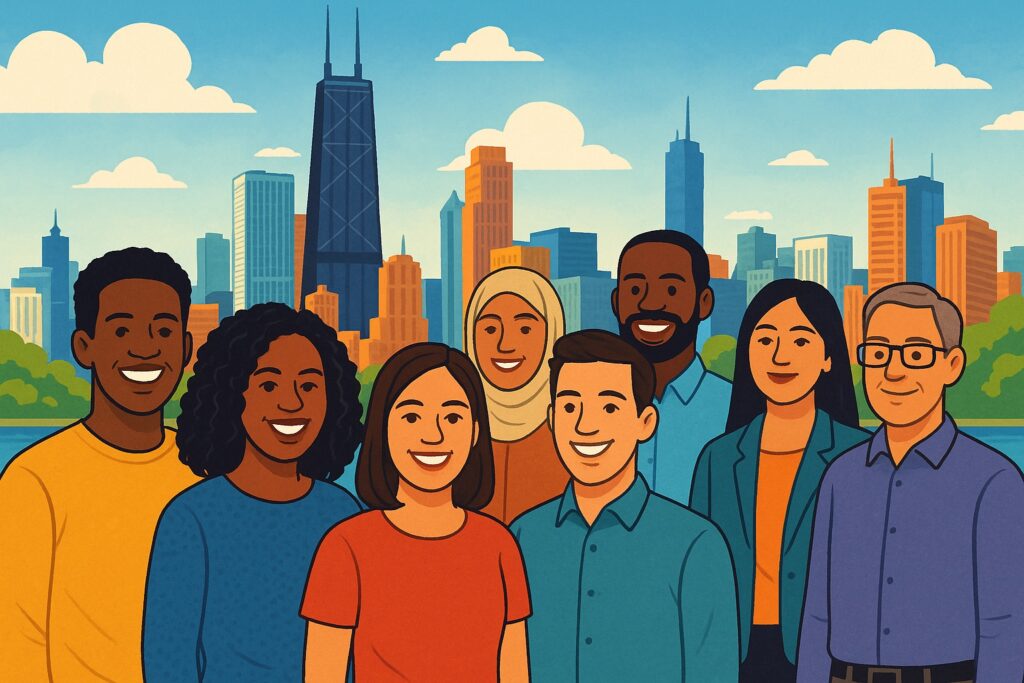
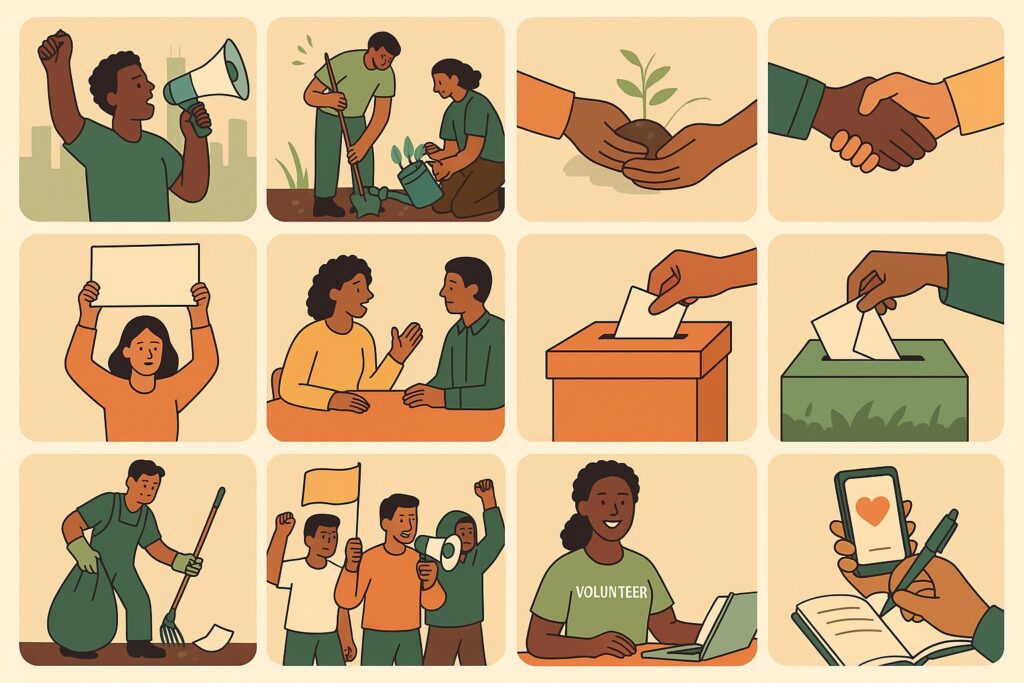
On any given weekend in Chicago, it’s not unusual to see groups of young people filling the streets with signs, chants, and determination. What might surprise some is how central these youth voices have become to the city’s larger fight for justice. They are no longer just participants on the sidelines; they are organizers, strategists, and community builders. Their activism isn’t an occasional act — it’s an ongoing commitment that reflects both frustration with the present and hope for a better future.
The rise of youth-led social justice movements in Chicago isn’t happening in isolation. It’s part of a longer story of activism that has always placed young people at the center, though the methods and platforms have evolved. Today’s generation is redefining what civic engagement looks like, blending traditional protest with new forms of digital organizing, art, and peer-led education.

A Deep History of Youth Resistance in Chicago
To understand the role young Chicagoans play now, it helps to remember that youth activism has shaped the city before. In the mid-20th century, high school and college students were crucial to the civil rights and anti-war movements. Many joined marches for fair housing or participated in sit-ins demanding desegregation of public spaces. Later, students pushed for ethnic studies in schools, insisting that Chicago’s diverse cultural history be properly recognized in classrooms.
What stands out is not just their presence but their persistence. Even when national attention shifted elsewhere, Chicago youth stayed active at the neighborhood level, ensuring their communities weren’t left out of broader reforms. This long tradition of young leadership continues to inspire today’s organizers, who often see themselves as carrying forward a legacy rather than starting from scratch.
What Today’s Young Activists Are Doing Differently
Using Schools as Platforms for Protest
High school and college campuses have become staging grounds for activism. Walkouts, teach-ins, and student-led demonstrations highlight how deeply social issues cut into the daily lives of young people. Whether it’s demanding safer classrooms, more equitable funding, or attention to climate change, these actions prove that schools are not only places of learning but also centers of civic life.
Social Media as the New Megaphone
Unlike previous generations, today’s youth have tools that allow their voices to spread instantly. Instagram, TikTok, and Twitter aren’t just entertainment — they are digital town halls. A single post can mobilize hundreds within hours. In Chicago, youth-led groups such as GoodKids MadCity have used these platforms to call attention to gun violence, connect with peers, and organize rallies that reach beyond neighborhood boundaries.
Building Their Own Leadership Structures
Young activists aren’t waiting for established organizations to hand them positions of power. They are forming their own collectives, art projects, and mutual aid networks. These initiatives often blur the line between activism and community care, proving that leadership doesn’t always look like standing at a podium — sometimes it looks like coordinating food distribution, hosting healing spaces, or creating murals that tell untold stories.
The Issues Fueling Youth-Led Movements
The passion that drives young people to organize isn’t abstract; it’s rooted in lived realities:
- Gun violence and public safety remain top concerns, as many young Chicagoans have lost friends, classmates, and relatives to shootings.
- Education equity motivates students to push for schools with fair resources, updated facilities, and culturally relevant curriculum.
- Climate justice resonates strongly, as youth see pollution and environmental degradation hitting low-income neighborhoods the hardest.
- Racial justice and policing continue to spark activism, with young people at the forefront of demonstrations demanding accountability and systemic reform.
For youth, these aren’t policy talking points — they’re urgent, daily struggles. That’s why their activism often feels raw, urgent, and impossible to ignore.
Bridging Generations in the Fight for Justice
At times, youth activism is viewed as disruptive or overly idealistic. Yet many community organizations are learning to embrace it as vital to long-term change. Collaborations between youth-led groups and established nonprofits are becoming more common, creating spaces where experience meets innovation.
Older activists bring historical perspective and knowledge of navigating political systems. Younger leaders bring fresh strategies, cultural relevance, and the ability to reach peers in ways traditional advocacy sometimes cannot. Together, these partnerships can amplify campaigns around housing, education, and policing, giving them broader reach and stronger staying power.
Together, these partnerships can amplify campaigns around housing, education, and policing, giving them broader reach and stronger staying power. Community safety is also part of this work, with everyday needs — from neighborhood watch programs to reliable locksmith services in Chicago — supporting residents as they build stronger, safer communities.
The Future Being Built by Chicago’s Youth
Looking at the past decade, it’s clear that young people are not content to wait for permission to lead. They are already shaping Chicago’s social justice landscape in ways that will echo for years. Their activism is about more than protest — it’s about reimagining what community looks like. Art, music, mutual aid, and digital organizing all serve as building blocks for a new kind of civic culture.
For many youth, activism is tied directly to survival and identity. But it is also about vision — about imagining a Chicago where safety doesn’t depend on policing alone, where schools reflect the communities they serve, and where opportunity is not limited by zip code.
Youth as Today’s Leaders, Not Tomorrow’s
The common phrase “youth are the leaders of tomorrow” doesn’t capture the reality of Chicago’s movements. They are already leaders. Their organizing, creativity, and persistence remind us that meaningful change is not only possible but inevitable when young people refuse to remain silent.
Chicago’s history has always been marked by grassroots struggles that began with ordinary people taking extraordinary risks. Today, its young activists carry that torch forward. They show us that the fight for justice is not something to inherit passively—it is something to create, boldly, in the present moment. Their efforts also inspire greater civic engagement, encouraging residents, organizations, and every local business to play an active role in building stronger, more equitable communities.
The written content on this page was generated by ChatGPT.