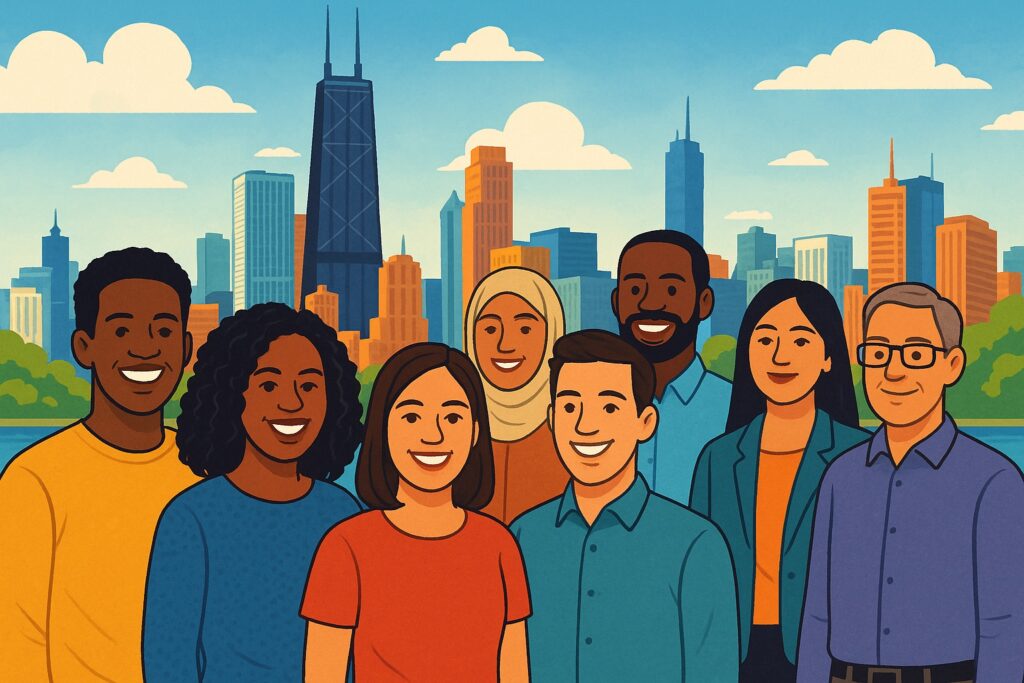
Chicago has always been a city of contrasts. Towering skyscrapers and cultural landmarks often stand side by side with neighborhoods still struggling to recover from decades of underinvestment. These divisions are not new, but what has changed is the determination of local leaders, nonprofits, and community members to address them head-on. Across the city, a range of equity and inclusion programs are reshaping how residents experience education, employment, housing, healthcare, and even cultural life. Together, they are gradually reimagining Chicago as a city where opportunity is not determined by race, income, or zip code.
Education as the Foundation of Change
Many advocates argue that lasting equity must begin with education. In Chicago, public schools have long reflected broader social divides, with resource gaps most visible on the South and West Sides. The establishment of the CPS Office of Equity was one response to these challenges. By focusing resources on underfunded schools, expanding access to advanced coursework, and ensuring bilingual programs reach immigrant communities, the initiative is narrowing achievement gaps that had persisted for generations.
Beyond the school system itself, nonprofit programs are stepping in to fill voids. My Brother’s Keeper Chicago connects young men of color with mentors who share their backgrounds and understand the unique challenges they face. This kind of support can mean the difference between dropping out and pursuing higher education. Similarly, after-school initiatives in underserved neighborhoods are giving students access to technology, arts, and science opportunities that broaden horizons well beyond the classroom.
Creating Fair Pathways to Employment
Employment inequality has long mirrored racial and class divides in Chicago. Historically, some communities saw chronic underemployment even as other parts of the city boomed economically. In recent years, however, workforce development initiatives have started to close those gaps.
The Chicago Cook Workforce Partnership works with local employers to design career pipelines specifically aimed at underrepresented groups. Tech-focused programs, such as those offered by ChiTech Academy and community coding bootcamps, are equipping young people with in-demand skills that position them for jobs in industries previously out of reach. In addition, corporations across the city are reevaluating their hiring practices, often creating diversity offices or leadership tracks designed to ensure decision-makers better reflect the communities they serve.
The results are visible not only in statistics but also in the stories of Chicagoans who are entering stable, well-paying careers for the first time. Equity in employment is not simply about numbers; it is about breaking cycles of economic disadvantage and giving families the tools to build generational stability.
Housing and Neighborhood Stability
Where a person lives in Chicago has often shaped their entire life trajectory. For decades, redlining, predatory lending, and uneven investment created stark divides between neighborhoods. Today, the city is tackling these issues through a mix of policy and grassroots initiatives.
Chicago’s Affordable Requirements Ordinance compels new housing developments to include affordable units, preventing displacement in areas where rents are rising. Nonprofits such as The Resurrection Project have become champions of community-focused development, building affordable housing while also offering financial literacy workshops to help families stay in place. In neighborhoods facing the pressures of gentrification, these efforts give residents a chance to remain rooted while still benefiting from local improvements.
Stability in housing is more than having a roof overhead—it strengthens entire communities. Families who can stay in their neighborhoods maintain ties to schools, local businesses, and cultural traditions. That sense of belonging is central to inclusion.
Health Equity as a Measure of Justice
Disparities in healthcare access have long highlighted inequities in Chicago. Communities of color, particularly on the city’s West and South Sides, often face higher rates of chronic illness while having fewer healthcare options nearby. To counter this, a network of community health centers has expanded its reach.
Organizations such as Lawndale Christian Health Center and Erie Family Health Centers bring affordable medical care into neighborhoods where residents once had to travel long distances for even basic treatment. Services extend beyond primary care, offering counseling, nutrition programs, and preventative education tailored to each community. Importantly, these centers often provide care in multiple languages, breaking down barriers for immigrant families who may otherwise struggle to access services.
Public health advocates also highlight environmental justice as a critical part of the equation. Campaigns to reduce air pollution, improve water safety, and increase access to fresh food are essential steps in reducing health disparities. By tackling the root causes of poor health, equity programs are reshaping Chicago’s approach to wellness.
Cultural Inclusion and Representation
Equity is not solely about policies—it is also about representation and visibility. Chicago’s arts and cultural institutions are playing a pivotal role in making sure all voices are heard.
The Black Ensemble Theater showcases stories that highlight African American history and resilience. The Segundo Ruiz Belvis Cultural Center celebrates Puerto Rican culture and provides space for youth programs. Women-led and LGBTQ+ arts groups are similarly carving out platforms where marginalized voices can be seen and celebrated.
These cultural efforts are more than entertainment; they create spaces where identity is validated, where empathy grows, and where communities can connect through shared experience. Representation in art and culture ensures that inclusion is not abstract but lived and visible in daily life.
Looking Toward the Future
Chicago’s work on equity and inclusion is ongoing, and challenges remain. Systemic barriers built over decades cannot be dismantled overnight. Yet the combined efforts of city programs, nonprofits, businesses, and grassroots organizers are making a measurable difference.
Each initiative—whether in education, housing, health, or culture—may seem small on its own, but together they are reshaping the city’s identity. Chicago is becoming a place where more residents can see a future for themselves and their families, regardless of where they started. That is the essence of equity and inclusion: ensuring that opportunity is not the privilege of a few but the shared right of all.
he written content on this page was generated by ChatGPT.