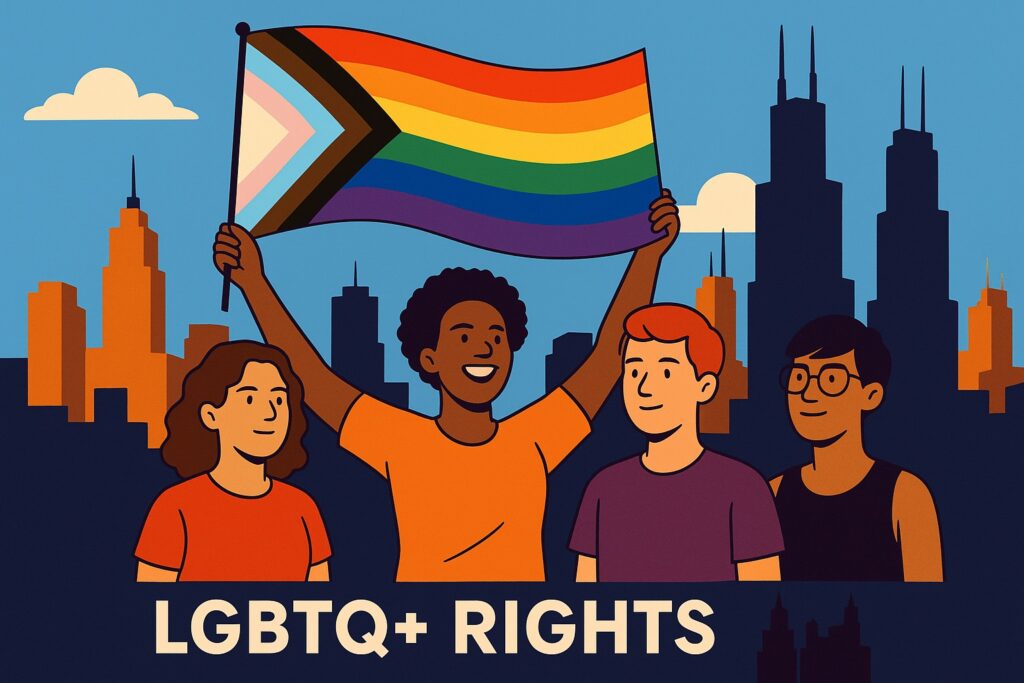
Walk through the streets of Chicago on a summer weekend, and it’s easy to see the city’s vibrant, unapologetic embrace of its LGBTQ+ community. Rainbow flags hang from apartment balconies, coffee shop windows display inclusive signs, and entire blocks light up during Pride Month. Yet beneath the celebratory colors lies a story that’s far more layered—a history shaped by decades of activism, legal battles, cultural shifts, and ongoing challenges that keep advocates pushing forward.
The journey toward equality here hasn’t been a straight line. Chicago’s progress reflects moments of triumph, setbacks that demanded resilience, and a constant negotiation between local momentum and the broader national climate. To understand the current state of LGBTQ+ rights in Chicago, it’s worth revisiting the milestones that brought the city here and examining the issues that still require urgent attention.
Chicago’s Activist Roots Run Deep
Before the parades drew hundreds of thousands, the LGBTQ+ rights movement in Chicago was built on small, determined acts of defiance. In 1970, just one year after the Stonewall uprising in New York, a modest group of activists marched along Dearborn Street, demanding visibility and dignity. That first Pride event may have lacked the spectacle of today’s celebrations, but it carried the same message: equality is non-negotiable.
Over the years, neighborhoods like Boystown—now officially called Northalsted—emerged as safe havens where people could live and love openly. The community didn’t simply appear overnight; it was carved out by residents, business owners, and organizers who refused to accept invisibility.
The 1980s tested that resolve. The HIV/AIDS epidemic hit Chicago hard, claiming lives and fueling public fear. Organizations like the AIDS Foundation of Chicago and ACT UP Chicago were relentless in their demands for better healthcare access, fair treatment, and public education. Their activism saved lives and also cemented Chicago’s reputation as a city where LGBTQ+ organizing was as much about survival as it was about equality.
Policy Gains and Legal Recognition
Illinois has often been ahead of the curve in passing protective laws, and Chicago has played a pivotal role in making them reality. Key achievements include:
- 2005 – Illinois Human Rights Act Expansion: This landmark move outlawed discrimination based on sexual orientation in employment, housing, and public accommodations.
- 2011 – Civil Unions Become Law: Before same-sex marriage was legalized, this measure granted couples many legal protections, though full equality was still out of reach.
- 2014 – Marriage Equality: When Illinois recognized same-sex marriage, Cook County offices were flooded with couples eager to make their unions legal.
- 2020 – Gender-Neutral ID Options: The introduction of the “X” gender marker on driver’s licenses and state IDs was a key win for nonbinary and gender-nonconforming residents.
Beyond state legislation, Chicago has enacted ordinances requiring gender-neutral restrooms in many public buildings and has established police department guidelines for respectful engagement with transgender and gender-nonconforming individuals.
Culture and Community Flourish
While laws provide structure, culture shapes the lived experience. Chicago’s LGBTQ+ community is not confined to a single neighborhood—it thrives across the city. Events like Chicago Pride Fest, the Dyke March, and Chicago Black Pride highlight the breadth of identities and experiences within the community.
The arts scene plays a central role as well. Theaters, galleries, and music venues routinely feature LGBTQ+ creators, offering a platform for voices that mainstream spaces have historically overlooked. Local publications such as Windy City Times not only report on politics and events but also help preserve the history and stories of Chicago’s queer community.
Neighborhoods like Andersonville have also gained reputations for inclusivity, fostering spaces where acceptance isn’t just expected—it’s woven into the everyday fabric of life.
The Work That Still Needs to Be Done
Progress doesn’t erase inequity, and Chicago’s LGBTQ+ residents continue to face serious hurdles.
1. Healthcare Gaps
Transgender and gender-nonconforming residents frequently encounter barriers when seeking medical care. Even in a city with multiple LGBTQ+-friendly clinics, shortages of providers trained in gender-affirming care remain a significant issue.
2. Persistent Violence
While Chicago prides itself on diversity, incidents of hate-motivated violence still occur. Transgender women of color, in particular, face disproportionate levels of harassment and physical danger.
3. Housing Instability
Discrimination in housing and employment persists in less overt ways. LGBTQ+ youth remain overrepresented among the homeless population, often after being rejected by their families.
4. Political and National Pressures
Shifts at the federal level and legislative attacks in other states can indirectly affect Chicago. Funding for LGBTQ+ programs and legal protections often hinges on broader political currents.
Where Chicago Goes From Here
Advocates are not standing still. Local organizations are pushing for expanded protections in the workplace, stronger enforcement of anti-discrimination laws, and increased funding for mental health and housing programs aimed at LGBTQ+ youth.
Younger activists are reimagining advocacy, blending street-level organizing with digital campaigns that can mobilize support in hours. Social media has become a powerful tool—not just for rallying people to events, but for documenting injustices and amplifying community-led solutions.
Why Chicago’s Role Matters Beyond Its Borders
Chicago’s approach to LGBTQ+ rights resonates well outside city limits. As a major urban center with a history of activism, it serves as both a testing ground for progressive policies and a symbol of what’s possible when communities work together. Victories here often influence legislative efforts in other parts of Illinois and even other states.
Chicago’s LGBTQ+ story is one of grit and growth. The city has celebrated hard-won victories—legal recognition, cultural acceptance, political influence—while acknowledging the work that lies ahead. Equality is not a static achievement; it’s an ongoing process that requires vigilance, compassion, and courage.
In that way, Chicago reflects a truth that applies everywhere: real progress is made when communities refuse to settle for half-measures and continue pushing toward a vision of justice that includes everyone.
The written content on this page was generated by ChatGPT.