Local Legislation Supporting Disability Rights

Walk through almost any Chicago neighborhood today, and you’ll see small but powerful reminders of progress — curb cuts that blend smoothly into crosswalks, audible pedestrian signals guiding the visually impaired, and ramps leading to public libraries that once had steps too steep to climb. These may look like ordinary design details, but behind each one lies years of advocacy, community persistence, and carefully written local legislation.

Chicago’s journey toward disability inclusion hasn’t been simple or sudden. It has evolved from decades of civic engagement, where residents, policymakers, and activists joined forces to ensure that accessibility isn’t treated as an afterthought. The city’s local laws have increasingly focused on empowering people with disabilities through fair housing, employment opportunities, accessible transit, and equal participation in civic life.

Local Legislation Supporting Disability Rights

A City Shaped by Advocacy and Action

Chicago has always had a reputation for grassroots movements, and its disability rights work reflects that same spirit of determination. Long before disability rights were a national conversation, local advocates were pushing for meaningful change right here in the city.

The foundation for much of today’s policy progress was built by organizations like Access Living and The Chicago Lighthouse, whose leaders spent years influencing city ordinances and accessibility programs. Their efforts helped Chicago become one of the earliest cities to align its policies with the Americans with Disabilities Act (ADA) — not just to meet federal requirements, but to set higher standards for inclusion.

The city’s “Accessible Chicago” initiative, for instance, expanded well beyond physical infrastructure. It was designed to create a unified approach across city departments so that public services, events, and resources would all reflect principles of universal design. By integrating feedback from disability advocates, Chicago began transforming accessibility from a technical requirement into a moral and civic responsibility.


Employment Equity and the Push for Economic Inclusion

For many Chicago residents with disabilities, access to employment represents independence and stability — but historically, this has been one of the most challenging barriers to overcome. Recognizing this, the city established the Mayor’s Office for People with Disabilities (MOPD) as a central hub for workforce inclusion programs.

One of its key achievements has been the creation of targeted job training and placement initiatives designed to connect qualified individuals with employers who value diversity. Beyond direct hiring, the MOPD has guided local businesses on how to remove workplace obstacles, adopt flexible arrangements, and ensure equal pay practices.

City contracts now often include language promoting accessibility in hiring and employment practices. By integrating inclusive procurement standards, Chicago not only creates opportunities but also influences private-sector behavior. These legislative changes, while less visible than ramps or signage, are equally transformative — ensuring that equity extends into the economic fabric of the city.


Accessible Housing: Independence at Home

Another crucial pillar of disability rights legislation in Chicago centers around housing accessibility. Through policies like the Affordable Requirements Ordinance (ARO) and updates to the Chicago Building Code, the city has taken steps to ensure that affordable housing developments include accessible features by design, not as an afterthought.

The city’s decision in 2019 to modernize its building code was especially significant. It aligned local regulations with international accessibility standards, ensuring that newly built units included essential features such as barrier-free entries, wider hallways, and adaptable bathrooms.

This evolution in housing policy reflects a shift in perspective — accessibility is now seen not merely as an accommodation but as a right tied to dignity, safety, and independence. For residents living with mobility limitations, these policies mean the difference between dependency and self-sufficiency.


Transportation and the Freedom to Move

Transportation equity has long been at the heart of Chicago’s inclusion efforts. A city known for its vast transit system recognized early on that mobility is the foundation of opportunity. The Chicago Transit Authority’s All Stations Accessibility Program (ASAP) represents a long-term commitment to make every train station accessible by 2038.

These upgrades involve much more than elevators. They encompass improved signage, tactile wayfinding paths, and design refinements that allow all riders — including seniors and people with temporary disabilities — to navigate the system comfortably.

Additionally, the city’s Paratransit Program provides an essential alternative for those who can’t use traditional transit routes. This service, guided by both federal and local mandates, ensures that independence isn’t limited by physical constraints. Each new policy iteration is informed by community feedback, reinforcing the belief that accessibility succeeds only when shaped by the voices of those it serves.


Education and Public Inclusion

In education, the Chicago Public Schools (CPS) system has steadily strengthened its approach to supporting students with disabilities. Local policies build upon the federal Individuals with Disabilities Education Act (IDEA) but go a step further by ensuring accountability at the school level.

From expanded individualized education plans to inclusive classroom designs, CPS continues to refine how it accommodates diverse learning needs. The district’s initiatives also extend to after-school programs, arts, and athletics — ensuring that students with disabilities can participate fully in every aspect of student life.

Beyond schools, Chicago’s libraries, community centers, and museums have also embraced universal design. Simple yet thoughtful changes — like adjustable service counters, sensory-friendly spaces, and accessible technology — make these institutions more welcoming for all.


Healthcare, City Services, and Crisis Preparedness

Accessibility in healthcare remains a major focus for local policymakers. The MOPD’s Disability Resource Center serves as a gateway for residents seeking information on health services, benefits, and accessible communication. Legislative backing ensures that these programs receive the funding and oversight needed to maintain high standards of inclusion.

In recent years, Chicago’s local legislation has also emphasized emergency preparedness for people with disabilities. Whether during extreme weather events or public health crises, city agencies are required to include accessibility considerations in planning — from shelter design to evacuation notifications. This proactive approach underscores the city’s belief that every life deserves equal protection in times of crisis.


Community Partnerships That Drive Policy

While laws set the framework, real progress happens when communities hold those laws accountable. Chicago’s disability advocacy organizations remain powerful partners in shaping legislation. Through collaborations with city officials, they bring forward the lived experiences that statistics alone can’t capture.

Groups such as Disability Lead, The Chicago Hearing Society, and Access Living not only push for policy reform but also help implement training programs and monitor compliance. Their involvement ensures that every piece of legislation remains grounded in reality rather than political rhetoric.

This partnership between advocates and lawmakers has become one of Chicago’s most effective tools for advancing disability rights. It reflects a model other cities can learn from — one where policymaking is participatory, responsive, and rooted in human experience.


Looking Ahead: Beyond Compliance Toward Equity

Despite the progress, Chicago continues to face new challenges as society changes. The growing importance of digital technology, for instance, has introduced a new dimension to accessibility. Future local legislation will likely address digital inclusion, ensuring that city websites, apps, and public communication systems remain fully accessible to residents with visual, hearing, or cognitive impairments.

Emerging conversations around inclusive housing development, climate resilience, and AI-driven employment screening are also shaping Chicago’s next wave of disability rights policy. Advocates are already working to ensure that these modern issues are addressed through an equity lens.

The city’s ongoing commitment to reform shows that accessibility isn’t a finished project — it’s an evolving responsibility that must adapt with each new generation of residents.

source: ABC 7 Chicago

Conclusion

Chicago’s story of disability rights legislation is, at its heart, a story of community. It’s about people who refused to be invisible, policymakers who listened, and a city that continues to learn how to serve all its residents with dignity.

From the layout of sidewalks to the language in employment ordinances, every advancement tells a piece of that larger narrative — one where inclusion is not an exception but an expectation. As local legislation continues to evolve, Chicago stands as a reminder that genuine progress isn’t measured only by laws on the books, but by how those laws reshape everyday life.

The written content on this page was generated by ChatGPT.

The Fight for Accessible Public Transportation in Chicago

It’s hard to truly know Chicago until you’ve experienced its transit heartbeat — the screech of the ‘L’ trains, the hum of buses along Michigan Avenue, the steady shuffle of commuters at rush hour. For most people, getting around the city is second nature. But for thousands of Chicagoans living with disabilities, every commute is a challenge filled with uncertainty. An elevator might be broken, a ramp too steep, a station entirely inaccessible.

This daily reality has turned the simple act of mobility into a civil rights issue. Over time, the struggle for accessible public transportation in Chicago has become one of the most defining — and ongoing — battles for equality in the city’s modern history.

A Long Road Toward Inclusion

Chicago’s transit network is among the oldest and busiest in the country, serving millions each week. Its infrastructure, however, tells a story of an earlier era — one that rarely accounted for the needs of people with disabilities. When the Americans with Disabilities Act (ADA) became law in 1990, it marked a turning point for Chicago’s transit system, compelling the city to face the realities of an outdated design.

The Chicago Transit Authority (CTA) began introducing elevators, tactile platform strips, and paratransit services. Still, decades later, accessibility remains a patchwork. Some stations, particularly on older lines like the Blue or Red, remain out of reach for riders using wheelchairs. Elevators sometimes fail, leaving people stranded between levels. For a city that prides itself on progress, the gaps are deeply visible.

Each missing ramp or malfunctioning lift is more than an inconvenience — it’s a barrier to employment, education, and independence.


Why Access Is About More Than Transportation

Accessibility in transportation often gets reduced to logistics or compliance. But for those directly affected, it represents something far greater — autonomy. Without reliable access, a morning commute can become an obstacle course, and simple trips require intricate planning.

Many Chicago residents who live with disabilities describe accessibility as a form of freedom. It allows them to choose where to work, which schools to attend, and how to participate in community life. When that freedom is limited by design flaws or budget delays, the impact ripples across generations.

Accessible transit, in other words, isn’t about charity — it’s about justice.


The Voices Behind the Movement

No progress in this fight has come easily. Community advocates and grassroots organizations have been the engine behind nearly every meaningful improvement. Access Living, one of Chicago’s most vocal disability advocacy groups, continues to hold city leaders accountable. They have led campaigns, organized demonstrations, and partnered with policymakers to highlight real-life experiences of riders who navigate the system daily.

Their advocacy extends beyond ramps and elevators. They’ve brought attention to communication gaps that affect visually and hearing-impaired riders — from inaudible announcements to poorly placed signage. Other groups, such as Disability Rights Chicago, have fought for stronger enforcement of ADA standards and increased transparency from the CTA.

It’s this steady, persistent activism that has transformed accessibility from a side issue into a central topic of urban planning.


CTA’s All Stations Accessibility Program (ASAP)

In response to decades of pressure, the CTA launched the All Stations Accessibility Program (ASAP) in 2018 — an ambitious blueprint designed to make every station fully accessible. It’s not a short-term fix; it’s a 20-year commitment involving elevator installations, new ramps, platform adjustments, and complete station redesigns.

The plan acknowledges what residents have long known: retrofitting a 100-year-old transit system is no simple feat. Many stations sit beneath or above existing infrastructure, requiring complex engineering to ensure safety and functionality. Some stations are considered historic landmarks, adding layers of bureaucracy and cost.

Yet, despite the logistical hurdles, progress is visible. Modernized stations like Wilson, 95th/Dan Ryan, and Belmont demonstrate what an accessible future could look like — one that serves all Chicagoans equally, without compromise.


Policy, Budgets, and the Power of Priorities

Funding accessibility is as much a political challenge as it is an engineering one. Federal transportation grants and state funding only go so far, and city leaders must decide which projects move forward first.

Advocates argue that accessibility can’t remain a “phase two” priority. Every infrastructure conversation — from new train cars to station design — must start with inclusion at the core.

Moreover, accessibility extends beyond train platforms. It includes sidewalk conditions, bus stops, and safe pedestrian crossings, especially in neighborhoods where residents already face economic and social barriers.

Without consistent funding and accountability, even the most well-intentioned programs risk falling short.


Everyday Obstacles That Still Remain

Even with new initiatives, barriers persist. Riders often report elevators being out of service for days. Snow and ice block curb ramps during winter. Some bus shelters lack proper seating or spacing for wheelchair users.

These everyday issues often go unnoticed by the majority of commuters but can completely derail someone’s day. That’s why disability rights advocates continue to push for real-time accessibility updates, better communication, and faster maintenance responses.

Chicago has also begun experimenting with mobile navigation tools and apps designed to help people plan trips that account for accessibility features. These digital tools are promising — but technology cannot replace physical access.


A New Generation Demands Better

Today, a new generation of activists is reimagining what an inclusive Chicago could look like. High school and college students with disabilities are joining advocacy groups, demanding not only access but representation in decision-making spaces.

They’re connecting accessibility to broader issues — like economic justice, affordable housing, and climate resilience — recognizing that mobility is at the intersection of all three. After all, how can someone participate in a green economy or attend a public hearing about environmental reform if they can’t even get to the venue?

The conversation has evolved, and it’s becoming clear that accessibility isn’t an isolated battle. It’s tied to every other form of equity the city hopes to achieve.


Looking Ahead: The Path Toward Equity

Chicago’s journey toward fully accessible public transportation is still unfolding. Progress can feel slow, but each renovated station and new elevator represents another step toward fairness. The work requires persistence, empathy, and sustained political will.

Advocates continue to stress one core message: accessibility benefits everyone. Parents with strollers, seniors with limited mobility, travelers with heavy luggage — all rely on the same design improvements that help riders with disabilities.

An inclusive city isn’t just a moral goal; it’s practical. It makes public transit more efficient, more reliable, and more humane.

source: Google Local Guides

Accessibility as the Measure of a City

When you measure a city’s greatness, look not at its skyline, but at its accessibility. The fight for accessible public transportation in Chicago reflects something deeper — the city’s commitment to equality in motion.

It’s not simply about elevators or ramps. It’s about ensuring that every person, regardless of physical ability, has the same right to move through the world freely and confidently.

Chicago’s path forward may be long, but the direction is clear. Each improvement — whether a newly accessible station, a smoother sidewalk, or an improved announcement system — is a testament to a collective promise: that the city belongs to everyone.

The written content on this page was generated by ChatGPT.

Policing and Public Safety: Reimagining Justice in Chicago

In the heart of Chicago, conversations about public safety and justice have taken on new urgency. For many residents, this discussion isn’t just about police tactics or crime rates—it’s about how the city defines fairness, accountability, and community well-being. The idea of “reimagining justice” is not a slogan here; it’s a movement that continues to reshape how Chicago protects its people and rebuilds trust where it has long been broken.

Policing and Public Safety: Reimagining Justice in Chicago

A City with a Complicated Legacy

Chicago’s relationship with policing is deeply layered, shaped by both progress and pain. The city’s past includes moments of reform, courageous officers who served with integrity, and also chapters marked by misconduct and tension. Generations of residents—particularly those in communities of color—have carried the weight of these experiences. For some, safety has meant calling for protection; for others, it has meant demanding protection from the protectors.

This dual reality underscores why the push for reform feels so personal. The demand for a new approach to justice has not come from theory or political debate, but from lived experiences that have made it clear: the old systems are no longer enough.

Community-Based Safety as the New Standard

A quiet transformation is happening across Chicago’s neighborhoods. Residents and local organizations are building safety models that start with care, not punishment. Initiatives such as youth mentorship programs, neighborhood watch partnerships, and violence interruption teams are creating more direct paths to peace. These grassroots movements focus on prevention, communication, and opportunity rather than reactionary enforcement.

For example, in parts of South and West Chicago, community-led teams work directly with families to mediate conflicts before they escalate. They’re proving that when people have jobs, education, and housing stability, violence declines. It’s not a theory—it’s what happens when the definition of safety expands beyond policing alone. And as neighborhoods adopt new forms of community protection, advanced security systems are quietly reinforcing everyday safety at home and in local businesses.

The Long Road to Accountability

Transparency is one of the most powerful tools for reform. Over the last few years, Chicago has taken measured steps toward openness, including public access to police data, the use of body cameras, and the creation of civilian oversight boards. These efforts have given residents more visibility into how decisions are made and actions are taken.

But real accountability goes beyond releasing reports or footage. It requires cultural transformation inside the system. Training officers in de-escalation, bias awareness, and crisis management is part of that shift—but it only works when leadership commits to long-term consistency. A single workshop cannot erase generations of mistrust. What residents want is proof that policy changes lead to measurable difference on the streets.

Rethinking How Crises Are Handled

One of the most promising shifts in Chicago’s public safety landscape involves rethinking how the city responds to mental health emergencies. Historically, police were dispatched to situations that didn’t require law enforcement at all—someone in crisis, for instance, might have needed a counselor, not a badge.

In recent years, pilot programs have emerged pairing mental health professionals with first responders. Early results show fewer arrests, more people receiving care, and reduced strain on emergency systems. For families who once hesitated to call for help out of fear of escalation, this change feels like a lifeline. It’s a reminder that safety and compassion can coexist when cities design systems that prioritize humanity over haste.

Restoring Trust and Strengthening Neighborhood Bonds

Trust has been one of the most fragile pieces in Chicago’s public safety puzzle. Many communities, especially those historically over-policed, are skeptical of reform promises. Rebuilding that trust will take patience and transparency.

Across the city, community-police dialogues and local safety councils are beginning to bridge that gap. Officers who attend neighborhood meetings, walk alongside residents during local events, and engage outside of crisis situations often discover something important—trust is built in small, consistent actions, not press releases. When residents see that their voices actually influence local safety priorities, participation grows and tension decreases.

Justice Beyond Policing

To truly reimagine justice in Chicago, the city must look beyond the walls of police stations and courtrooms. Public safety is inseparable from economic opportunity, education access, and social equity. If families live with constant instability—unaffordable housing, low wages, limited healthcare—then safety becomes an illusion. Addressing those inequalities is as much a part of justice as any policy reform.

Community leaders, social workers, educators, and entrepreneurs are now part of the broader justice network. Their work in creating employment pathways, safe spaces for youth, and equitable public services contributes to a sense of safety that cannot be measured solely by crime statistics.

source: ABC 7 Chicago

Looking Forward: A City Redefining Safety

Chicago’s journey toward a more just public safety system is far from finished, but its direction is clear. The focus is shifting from control to collaboration, from fear to fairness. The city’s residents are demanding systems that serve with them, not over them.

Reimagining justice means understanding that true safety cannot exist without trust, opportunity, dignity, and modern access control approaches that protect rights while enhancing community well-being. Every neighborhood in Chicago deserves that balance. Whether through policy reform, community action, or individual courage, the city continues to write a new chapter—one where public safety is not only measured by protection but by shared belonging.

Chicago’s story is still unfolding, but its message is already resonating: justice is not static. It grows when communities insist that everyone, no matter their background or ZIP code, deserves to feel safe, seen, and valued.

The written content on this page was generated by ChatGPT.

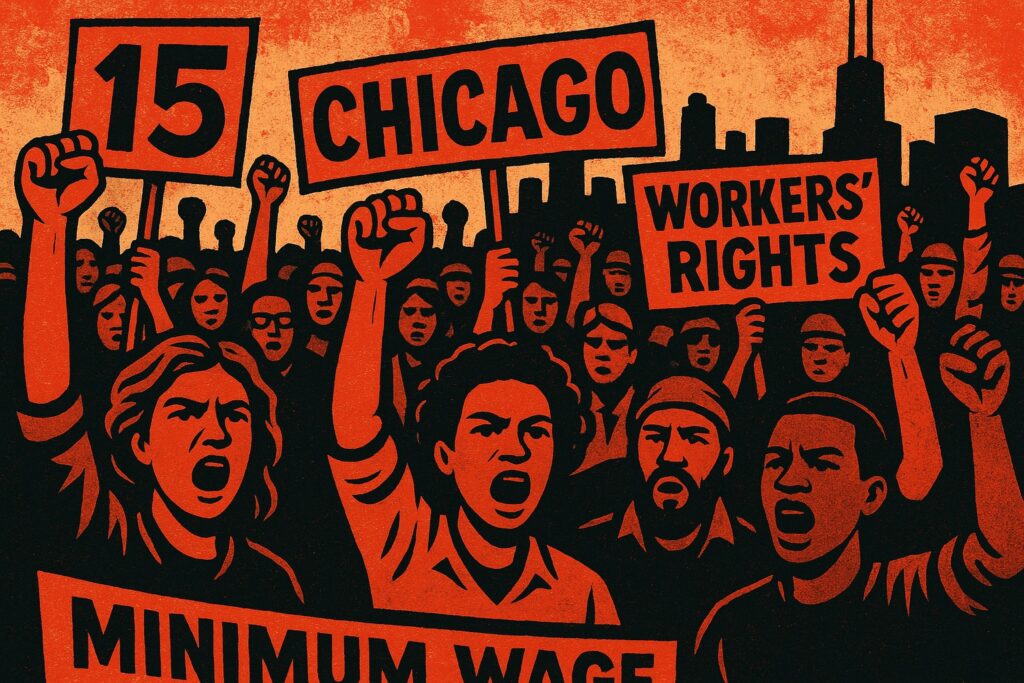
Chicago’s Minimum Wage and Workers’ Rights Movement

Walk through almost any neighborhood in Chicago—from the bustling corridors of the Loop to the industrial outskirts—and you can feel the pulse of a city built by workers. Every block carries the imprint of people who’ve labored, organized, and demanded to be treated with fairness and dignity. The struggle for better wages and fair treatment isn’t a recent chapter; it’s woven deep into the city’s DNA. Today, as the cost of living climbs and work itself continues to evolve, Chicago’s minimum wage and workers’ rights movement stands as both a continuation of that legacy and a new frontier in the fight for economic justice.

Chicago’s Minimum Wage and Workers’ Rights Movement

A Legacy Forged in Labor

Chicago’s reputation as a powerhouse city was born from its working class. In the late 19th and early 20th centuries, the city’s factories, rail lines, and slaughterhouses became symbols of both economic might and worker exploitation. The Haymarket Affair of 1886, which began as a rally for an eight-hour workday, ended in tragedy but cemented Chicago’s place in global labor history. That event, and countless others since, reminded the world that progress often requires courage and sacrifice from ordinary people who refuse to accept unfair systems.

That same spirit drives today’s conversations around the minimum wage. The tools have changed—now it’s social media campaigns, city council hearings, and union coalitions—but the heart of the movement remains the same: the belief that every worker deserves to live with dignity.

How Chicago Became a Leader in Wage Reform

When discussions about raising the minimum wage gained traction in the early 2010s, Chicago was among the first major cities to act. The City Council passed a 2014 ordinance that established a gradual path toward higher pay, taking the city well above the federal minimum of $7.25 per hour. The increases were phased in year after year, eventually reaching $16.20 in 2023 for most employers and continuing to adjust based on inflation.

These policy changes didn’t appear out of thin air. They were the direct result of sustained organizing by fast-food employees, healthcare workers, retail clerks, and janitors—people whose stories illuminated how difficult it had become to survive on stagnant wages. Movements like “Fight for $15” amplified their voices, shifting public sentiment and forcing policymakers to reckon with the realities of life in an expensive, modern metropolis.

The People Behind the Paychecks

Statistics can’t fully capture what these wage increases mean for those who live them. For many Chicagoans, a few extra dollars an hour can mean the difference between stability and crisis. Parents working two part-time jobs might finally have the means to cover rent without choosing between food and utilities. Young adults taking care of family members might have breathing room to pursue education or training that could open new doors.

Community organizations such as Arise Chicago, the Workers Center for Racial Justice, and the Chicago Federation of Labor have been instrumental in humanizing these struggles. They provide advocacy, education, and legal resources to help workers report wage theft, unsafe conditions, and other abuses. Through rallies, workshops, and storytelling, they’ve built solidarity across neighborhoods and industries, reminding the city that labor issues are also social justice issues.

Balancing Business and Fairness

Even as the minimum wage continues to rise, the debate around its economic impact remains intense. Small business owners often express concern about keeping up with labor costs, especially in sectors like food service or retail where profit margins are thin. Yet, advocates argue that fair pay doesn’t just uplift workers—it strengthens entire communities. When residents earn a livable income, they spend more locally, support neighborhood businesses, and contribute to a more stable economy overall.

Economists studying the city’s wage growth note that Chicago’s approach—raising pay in gradual increments—has helped reduce the shock to employers while still improving worker livelihoods. However, as inflation persists and automation grows, questions remain about how to sustain fairness without sacrificing opportunity.

The New Frontiers of Labor: Gig Work and Equity

The rapid rise of gig work has added complexity to Chicago’s labor landscape. Rideshare drivers, delivery couriers, and freelance workers often fall outside traditional labor protections. Without guaranteed wages, benefits, or job security, many of these workers face unpredictable income and limited recourse against unfair treatment.

City leaders have begun taking steps to address these gaps. Proposals for portable benefits, wage floors for gig platforms, and stronger contract transparency are gaining attention. Labor advocates see these initiatives as the next phase of the workers’ rights movement—a necessary adaptation to an economy increasingly defined by flexibility and precarity.

Policies That Reflect People’s Lives

In recent years, Illinois and Chicago have both taken meaningful strides toward a more equitable labor environment. The state’s ongoing workforce initiatives emphasize training, paid leave, and job safety. Meanwhile, new city policies have linked minimum wage increases to the Consumer Price Index, ensuring wages automatically adjust with inflation rather than stagnating for years between legislative actions.

There’s also growing interest in bold solutions, from universal basic income pilots to citywide equity programs targeting historically underserved neighborhoods. These experiments reflect a recognition that fair pay is just one part of a broader system—one that must address healthcare, housing, education, and transportation if true justice is to be achieved.

The Strength of Collective Action

What continues to define Chicago’s workers’ rights movement isn’t any single policy—it’s the city’s enduring belief in community power. When residents rally together, they can change more than laws; they can reshape mindsets. Faith organizations, youth groups, and unions frequently unite for shared causes, bridging divides of race, class, and occupation.

This unity has been central to Chicago’s progress. It reminds policymakers that behind every budget and ordinance are real lives affected by every decision. The strength of a city isn’t measured only in its skyline or its GDP, but in how it treats the people who keep it running.

source: CBS Chicago

Looking Toward a More Just Future

Chicago’s labor movement stands at a crossroads. The groundwork laid by past generations continues to guide new campaigns for fair wages, worker safety, and equitable opportunities. Yet, the path ahead is filled with challenges—global economic shifts, automation, and widening income inequality all demand creative, people-centered solutions.

Still, optimism runs deep. Chicago’s history shows that lasting change comes from persistence and collective will. Whether through legislation, union organizing, or grassroots advocacy, the fight for worker dignity is far from over. It is, in many ways, just entering a new era—one shaped not only by wages, but by a vision of shared prosperity that includes every worker, in every neighborhood.

In a city that has always celebrated hard work, the call for justice remains clear: when labor is respected, communities thrive. Chicago’s workers have proven that progress doesn’t come from waiting—it comes from standing together and refusing to be silenced.

The written content on this page was generated by ChatGPT.
Housing Policy and the Fight for Affordable Homes in Chicago

Walk through nearly any neighborhood in Chicago today and you’ll hear the same story told in different ways. Families are stretching their paychecks to cover rising rents, seniors are clinging to the homes they’ve lived in for decades, and younger residents often wonder whether they can afford to stay in the city at all. Behind these stories lies a larger truth: Chicago’s housing market is not just about supply and demand—it’s about equity, justice, and the right to a stable place to live.

Housing Policy and the Fight for Affordable Homes in Chicago

Why Housing Has Always Been a Justice Issue

Chicago’s housing challenges are not new. They are rooted in a long and complicated history of segregation, discriminatory lending, and uneven investment. Redlining maps drawn in the mid-20th century deliberately excluded communities of color from mortgages and credit, leaving entire neighborhoods without access to the tools needed for generational wealth. Later, public housing projects built with the promise of stability too often fell victim to underfunding and mismanagement, concentrating poverty rather than alleviating it.

Even as skyscrapers rose downtown and new condos appeared in gentrifying areas, many South and West Side neighborhoods saw disinvestment continue. This uneven pattern has shaped Chicago’s landscape in ways that remain visible today—luxury apartments a short train ride away from blocks where boarded-up homes are common. For many residents, this isn’t just an economic imbalance, it’s a legacy of injustice that continues to shape who gets to thrive and who struggles to stay housed.

The Policies Meant to Fix the Problem

To its credit, the city has put forward policies to address affordability. The Affordable Requirements Ordinance (ARO) forces developers of large projects to set aside a percentage of units for lower-income residents or contribute funds to housing initiatives. On paper, it looks like progress. In practice, the results are mixed.

Developers often opt to pay fees instead of building affordable units, funneling money into funds that don’t always guarantee housing in the neighborhoods where displacement is happening fastest. This leaves wealthier areas relatively untouched while concentrating lower-cost housing in already struggling communities. Other programs, such as the Low-Income Housing Tax Credit, have increased the number of units across the city, but critics argue the pace is far too slow compared to the need.

The Everyday Reality of Housing Insecurity

Policies are written in government buildings, but the consequences play out in kitchens and living rooms. A family in Uptown may find themselves paying more than half of their monthly income on rent, leaving little left for groceries or healthcare. In Pilsen, longtime residents watch property values rise around them, while landlords raise rents to levels that push working-class families out. In Englewood, where housing stock is older and often in need of repair, tenants may accept unsafe conditions simply because affordable alternatives are scarce.

These pressures ripple outward. Schools lose stability when families are forced to move frequently. Small businesses lose loyal customers when residents leave. Community ties—those networks of neighbors who look after each other—are frayed when displacement becomes a constant. In this way, the housing crisis is not just personal, it’s deeply communal. Reliable local services, from home repair specialists to garage door professionals, also play a role in maintaining the safety and value of homes across communities.

Grassroots Pressure and Calls for Change

Advocates across Chicago are pushing for stronger protections and more ambitious reforms. Some are calling for expanded tenant rights, including guaranteed legal representation for residents facing eviction. Others want stricter rules that ensure affordable units are included in new developments in every neighborhood, not just in lower-income areas.

There’s also growing interest in alternative models. Community land trusts, for example, place land under nonprofit ownership to guarantee permanent affordability, while cooperative housing gives residents shared ownership and decision-making power. Though these approaches aren’t yet widespread, they represent creative attempts to rethink what “affordable housing” means beyond short-term subsidies.

Looking Toward the Future

The direction Chicago chooses in the coming years will say a lot about what kind of city it wants to be. If unchecked gentrification continues, the risk is clear: working families, seniors, and young people will be pushed further out, transforming neighborhoods and deepening inequality. On the other hand, bold reforms—paired with genuine investment in communities—could turn housing into a tool for stability and opportunity.

Cities across the country are grappling with the same questions, but Chicago has a chance to lead. A comprehensive housing strategy that combines equitable policy, enforcement, and community-led solutions could set the tone for what a just urban housing system looks like.

source: ABC 7 Chicago

Housing has always been more than a roof over one’s head. It determines access to schools, healthcare, jobs, and the ability to build a stable future. For Chicago, the fight over affordable homes is about addressing a painful history while building a fairer city for generations to come. Just as secure garage doors help protect a home and provide peace of mind, affordable housing creates the stability families need to thrive.

As residents, activists, and policymakers debate the way forward, the message grows clearer: affordable housing is not a side issue. It’s the foundation of justice itself.

The written content on this page was generated by ChatGPT.

Criminal Justice Reform Efforts Reshaping Chicago’s Legal System

Conversations about criminal justice reform in Chicago are no longer limited to academic circles or late-night community meetings. They are unfolding in courtrooms, city hall, and neighborhood centers, with real changes reshaping how justice is defined and delivered. Chicago, like many major U.S. cities, has faced decades of scrutiny for systemic inequities in its legal system. What sets this moment apart is the scale and persistence of reform, fueled by both grassroots advocacy and formal policy shifts.

Criminal Justice Reform Efforts Reshaping Chicago’s Legal System

A Legacy That Demands Change

Chicago’s legal history is complicated. For decades, aggressive policing, harsh sentencing, and overcrowded jails left deep scars, particularly in Black and Latino neighborhoods. Generations of families watched loved ones cycle in and out of the system, often for low-level offenses that might have been handled differently elsewhere. These patterns were not just unfortunate outcomes but structural features of the system.

Acknowledging this legacy is critical, because it explains why reform has been so urgent and why trust between communities and institutions has been so fragile. Without addressing these roots, meaningful change would not be possible.

The Shift Away From Cash Bail

Few reforms have sparked as much discussion as bail reform. In the past, people who couldn’t afford bail—even for minor, nonviolent charges—remained in jail for weeks or months awaiting trial. This practice not only overcrowded Cook County Jail but also destabilized lives, costing jobs, housing, and sometimes custody of children.

Today, the old model is being dismantled. Cash bail has been replaced with systems that weigh risk rather than wealth. Judges now make pretrial decisions based on whether someone poses a threat to public safety, not whether they can come up with money.

Early results suggest that fears of dramatic crime spikes have not materialized, though the debate is ongoing. What is clear is that thousands of Chicago residents are no longer trapped in jail simply because of financial hardship—a profound shift in how pretrial justice operates.

Rethinking Sentencing Practices

Sentencing reform has also gained traction. Mandatory minimums that once locked people away for lengthy periods over relatively minor offenses are slowly being rolled back. Judges now have more discretion, and programs offering alternatives to incarceration are expanding.

Community service, restorative justice circles, and diversion programs are being used in place of jail time when appropriate. These approaches emphasize accountability without permanently derailing lives. They also acknowledge that incarceration is not always the best—or most cost-effective—answer to every offense.

The Changing Face of Probation

Another area under transformation is probation. Traditionally, probation systems were highly punitive, with minor violations leading to re-incarceration. In Chicago, there is a growing push to see probation as a tool for support rather than punishment.

This shift means more investment in mental health services, job training, and substance abuse treatment. The focus is on equipping individuals with tools to succeed rather than waiting for them to fail. This model not only helps reduce recidivism but also aligns with broader goals of rehabilitation and reintegration.

Police Accountability and Oversight

No discussion of criminal justice in Chicago can avoid the subject of policing. The Chicago Police Department has been under federal oversight since the 2017 consent decree, which required sweeping reforms after years of documented misconduct.

Progress has been uneven, but efforts are underway to strengthen training, de-escalation practices, and crisis intervention responses. Civilian oversight boards now play a larger role in monitoring misconduct cases, providing a level of transparency that residents have demanded for years.

Trust remains fragile, especially in neighborhoods that have borne the brunt of over-policing. Still, the existence of structural accountability mechanisms signals a shift in the balance of power between communities and the institutions that serve them.

Community-Led Alternatives

Reform is not only top-down; many of the most promising initiatives are being designed at the neighborhood level. Restorative justice hubs have become a fixture in some communities, focusing on repairing harm rather than imposing punishment.

Youth mentorship programs, mediation initiatives, and community courts offer alternatives that keep people out of the traditional system altogether. By creating space for dialogue, restitution, and personal growth, these efforts demonstrate that accountability and compassion can coexist.

The Barriers to Progress

Despite clear momentum, obstacles remain. Political debates often pit reform against public safety, creating a false choice that slows down policy implementation. Funding for community-led initiatives can be inconsistent, making it difficult to scale programs that are showing real promise.

There is also the challenge of perception. For some Chicagoans, reforms feel like necessary corrections; for others, they are seen as too lenient in a city struggling with violence. Bridging these perspectives is essential if reforms are to gain lasting public support.

Why This Work Matters

At its core, criminal justice reform in Chicago is about redefining what fairness looks like. For years, the system prioritized punishment over restoration, with devastating consequences. The current wave of change suggests a recognition that safety and justice require balance: accountability for harmful behavior, but also opportunities for redemption and second chances.

Reforms in bail, sentencing, probation, and policing are not just bureaucratic adjustments. They touch people’s lives directly, shaping whether families stay intact, whether jobs are lost, and whether communities feel respected by the institutions meant to serve them.

source: Learn About Law

Looking Ahead

Chicago’s reform journey is far from finished. The city faces an ongoing challenge: how to build a system that protects public safety while dismantling inequities. That requires sustained collaboration between lawmakers, community advocates, law enforcement, and residents themselves.

If the current trajectory holds, Chicago may become a model for how large urban areas can move beyond outdated systems and embrace justice that is more humane, balanced, and equitable. Residents and businesses can also strengthen community safety through modern access control solutions, helping protect homes, offices, and public spaces. Reform is not quick work, but it is necessary work.

Chicago is proving that when communities demand change and policymakers listen, even deeply entrenched systems can begin to transform. The legal system here is evolving, and in that evolution lies the possibility of a city where justice finally lives up to its name.

The written content on this page was generated by ChatGPT.

Faith-Based Organizations Driving Social Change in Chicago

When people think about social justice in Chicago, images of marches, grassroots organizers, and community meetings often come to mind. What’s less visible—yet deeply influential—is the network of faith-based organizations quietly shaping the city’s path toward equity. Across neighborhoods, spiritual leaders and their congregations are addressing challenges that government programs and nonprofits alone cannot fully resolve. Their involvement in social change is not just about offering charity but about building long-term, sustainable solutions rooted in compassion and moral conviction.

Faith-Based Organizations Driving Social Change in Chicago

Faith Communities as Anchors of Justice

Faith and justice have long been intertwined in Chicago’s history. During the Civil Rights movement, churches on the South and West Sides became command centers for organizing, where activists planned marches and trained volunteers. These weren’t simply houses of worship; they were hubs of resistance and hope.

That tradition has endured. Today, congregations, mosques, synagogues, and temples are still addressing issues such as housing insecurity, hunger, and racial discrimination. They stand as anchors in their neighborhoods, offering not just sermons but hands-on leadership in tackling some of Chicago’s most pressing problems.


Tackling Poverty With Practical Solutions

Many Chicago families face ongoing struggles with poverty. While food pantries provide immediate relief, faith-based organizations are expanding their reach by focusing on longer-term stability. Some have developed workforce readiness programs, teaching skills like digital literacy or trade certifications. Others are involved in affordable housing initiatives, purchasing or renovating properties to ensure families have safe, stable places to live.

In several cases, these groups partner with local businesses and financial institutions, creating opportunities for economic mobility. It’s not just about offering aid—it’s about restoring dignity by helping people chart a path out of hardship. Small community-driven companies, from tradespeople to providers of lock and key services, often play a role in strengthening neighborhoods by keeping families and properties secure.


Welcoming and Supporting Immigrant Communities

Chicago is home to a significant immigrant population, and faith communities have been among the first to step in with support. For newly arrived families, navigating language barriers and legal systems can be overwhelming. Churches and mosques often serve as safe spaces where people find translation services, legal clinics, and guidance on everything from school enrollment to healthcare access.

Beyond services, some congregations have committed themselves to sanctuary work, offering shelter and advocacy for undocumented individuals facing deportation. These efforts reflect a belief that protecting vulnerable communities is not just a civic duty but also a moral one.


Confronting Racial Inequities Head-On

Systemic racism continues to shape life in Chicago, whether through unequal education funding, housing segregation, or disparities in policing. Faith-based coalitions have stepped forward to confront these issues. Leaders from diverse religious traditions regularly come together to call for reforms that center justice and accountability.

Vigils, interfaith dialogues, and public demonstrations led by clergy members provide a moral framework for change. By placing human dignity at the core of their advocacy, these groups keep racial justice visible in both local politics and community conversations.


Addressing Health and Mental Wellness Gaps

Access to healthcare remains uneven across Chicago’s neighborhoods. In response, many faith-affiliated clinics and health ministries have emerged, offering affordable medical care where larger institutions have pulled back. These clinics often extend beyond physical health, with counseling and trauma recovery programs tailored to community needs.

Mental health support is particularly important. In places where stigma might otherwise prevent people from seeking care, trusted spiritual leaders often bridge the gap, encouraging openness and connecting residents with licensed professionals. This blending of faith and healthcare creates an environment where healing feels both accessible and culturally sensitive.


Interfaith Collaboration as a Model for Unity

One of the most remarkable aspects of social justice work in Chicago is the collaboration across religious lines. Interfaith councils and coalitions have organized around issues like environmental justice, affordable housing, and gun violence prevention. These partnerships show that while theological beliefs may differ, the values of compassion, fairness, and community uplift can bring people together in powerful ways.

This spirit of cooperation not only strengthens advocacy efforts but also fosters greater understanding between communities that might not otherwise interact. In a city as diverse as Chicago, these bridges matter.


Looking Ahead: Faith as a Force for Change

Faith-based organizations do not replace the role of city government, nor do they operate as isolated charities. Instead, they fill crucial gaps, amplifying the voices of residents who might otherwise go unheard. Their ability to combine spiritual conviction with practical programs allows them to respond to both immediate crises and long-term injustices.

As Chicago continues to grapple with challenges like affordable housing shortages, income inequality, and racial disparities, these organizations will remain key players in shaping a more equitable city. Their work reminds us that justice is not simply a policy goal—it is a shared responsibility rooted in empathy and community solidarity.


Closing Reflection

To understand the full story of social justice in Chicago, one must look beyond city hall and community boards to the sanctuaries, fellowship halls, and prayer spaces where much of the groundwork is being laid. Faith-based organizations are not just spiritual centers; they are engines of social transformation. By combining moral vision with tangible action, they prove that change is possible when compassion guides collective effort.

The written content on this page was generated by ChatGPT.

The Role of Chicago Youth in Shaping Social Justice Movements

On any given weekend in Chicago, it’s not unusual to see groups of young people filling the streets with signs, chants, and determination. What might surprise some is how central these youth voices have become to the city’s larger fight for justice. They are no longer just participants on the sidelines; they are organizers, strategists, and community builders. Their activism isn’t an occasional act — it’s an ongoing commitment that reflects both frustration with the present and hope for a better future.

The rise of youth-led social justice movements in Chicago isn’t happening in isolation. It’s part of a longer story of activism that has always placed young people at the center, though the methods and platforms have evolved. Today’s generation is redefining what civic engagement looks like, blending traditional protest with new forms of digital organizing, art, and peer-led education.

The Role of Chicago Youth in Shaping Social Justice Movements

A Deep History of Youth Resistance in Chicago

To understand the role young Chicagoans play now, it helps to remember that youth activism has shaped the city before. In the mid-20th century, high school and college students were crucial to the civil rights and anti-war movements. Many joined marches for fair housing or participated in sit-ins demanding desegregation of public spaces. Later, students pushed for ethnic studies in schools, insisting that Chicago’s diverse cultural history be properly recognized in classrooms.

What stands out is not just their presence but their persistence. Even when national attention shifted elsewhere, Chicago youth stayed active at the neighborhood level, ensuring their communities weren’t left out of broader reforms. This long tradition of young leadership continues to inspire today’s organizers, who often see themselves as carrying forward a legacy rather than starting from scratch.


What Today’s Young Activists Are Doing Differently

Using Schools as Platforms for Protest

High school and college campuses have become staging grounds for activism. Walkouts, teach-ins, and student-led demonstrations highlight how deeply social issues cut into the daily lives of young people. Whether it’s demanding safer classrooms, more equitable funding, or attention to climate change, these actions prove that schools are not only places of learning but also centers of civic life.

Social Media as the New Megaphone

Unlike previous generations, today’s youth have tools that allow their voices to spread instantly. Instagram, TikTok, and Twitter aren’t just entertainment — they are digital town halls. A single post can mobilize hundreds within hours. In Chicago, youth-led groups such as GoodKids MadCity have used these platforms to call attention to gun violence, connect with peers, and organize rallies that reach beyond neighborhood boundaries.

Building Their Own Leadership Structures

Young activists aren’t waiting for established organizations to hand them positions of power. They are forming their own collectives, art projects, and mutual aid networks. These initiatives often blur the line between activism and community care, proving that leadership doesn’t always look like standing at a podium — sometimes it looks like coordinating food distribution, hosting healing spaces, or creating murals that tell untold stories.


The Issues Fueling Youth-Led Movements

The passion that drives young people to organize isn’t abstract; it’s rooted in lived realities:

  • Gun violence and public safety remain top concerns, as many young Chicagoans have lost friends, classmates, and relatives to shootings.
  • Education equity motivates students to push for schools with fair resources, updated facilities, and culturally relevant curriculum.
  • Climate justice resonates strongly, as youth see pollution and environmental degradation hitting low-income neighborhoods the hardest.
  • Racial justice and policing continue to spark activism, with young people at the forefront of demonstrations demanding accountability and systemic reform.

For youth, these aren’t policy talking points — they’re urgent, daily struggles. That’s why their activism often feels raw, urgent, and impossible to ignore.


Bridging Generations in the Fight for Justice

At times, youth activism is viewed as disruptive or overly idealistic. Yet many community organizations are learning to embrace it as vital to long-term change. Collaborations between youth-led groups and established nonprofits are becoming more common, creating spaces where experience meets innovation.

Older activists bring historical perspective and knowledge of navigating political systems. Younger leaders bring fresh strategies, cultural relevance, and the ability to reach peers in ways traditional advocacy sometimes cannot. Together, these partnerships can amplify campaigns around housing, education, and policing, giving them broader reach and stronger staying power.

Together, these partnerships can amplify campaigns around housing, education, and policing, giving them broader reach and stronger staying power. Community safety is also part of this work, with everyday needs — from neighborhood watch programs to reliable locksmith services in Chicago — supporting residents as they build stronger, safer communities.


The Future Being Built by Chicago’s Youth

Looking at the past decade, it’s clear that young people are not content to wait for permission to lead. They are already shaping Chicago’s social justice landscape in ways that will echo for years. Their activism is about more than protest — it’s about reimagining what community looks like. Art, music, mutual aid, and digital organizing all serve as building blocks for a new kind of civic culture.

For many youth, activism is tied directly to survival and identity. But it is also about vision — about imagining a Chicago where safety doesn’t depend on policing alone, where schools reflect the communities they serve, and where opportunity is not limited by zip code.

source: NBC News

Youth as Today’s Leaders, Not Tomorrow’s

The common phrase “youth are the leaders of tomorrow” doesn’t capture the reality of Chicago’s movements. They are already leaders. Their organizing, creativity, and persistence remind us that meaningful change is not only possible but inevitable when young people refuse to remain silent.

Chicago’s history has always been marked by grassroots struggles that began with ordinary people taking extraordinary risks. Today, its young activists carry that torch forward. They show us that the fight for justice is not something to inherit passively—it is something to create, boldly, in the present moment. Their efforts also inspire greater civic engagement, encouraging residents, organizations, and every local business to play an active role in building stronger, more equitable communities.

The written content on this page was generated by ChatGPT.